
Last updated November 25, 2026
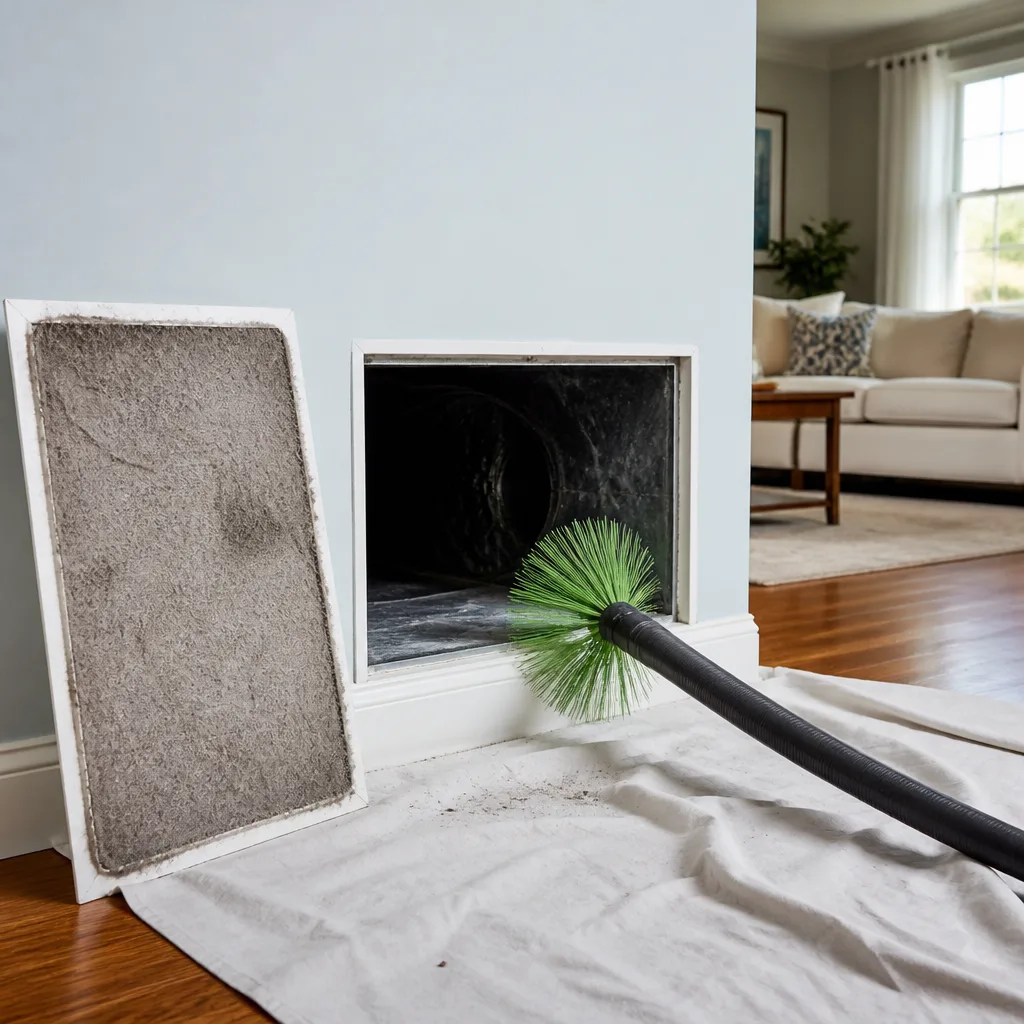 Whole-home duct cleaning
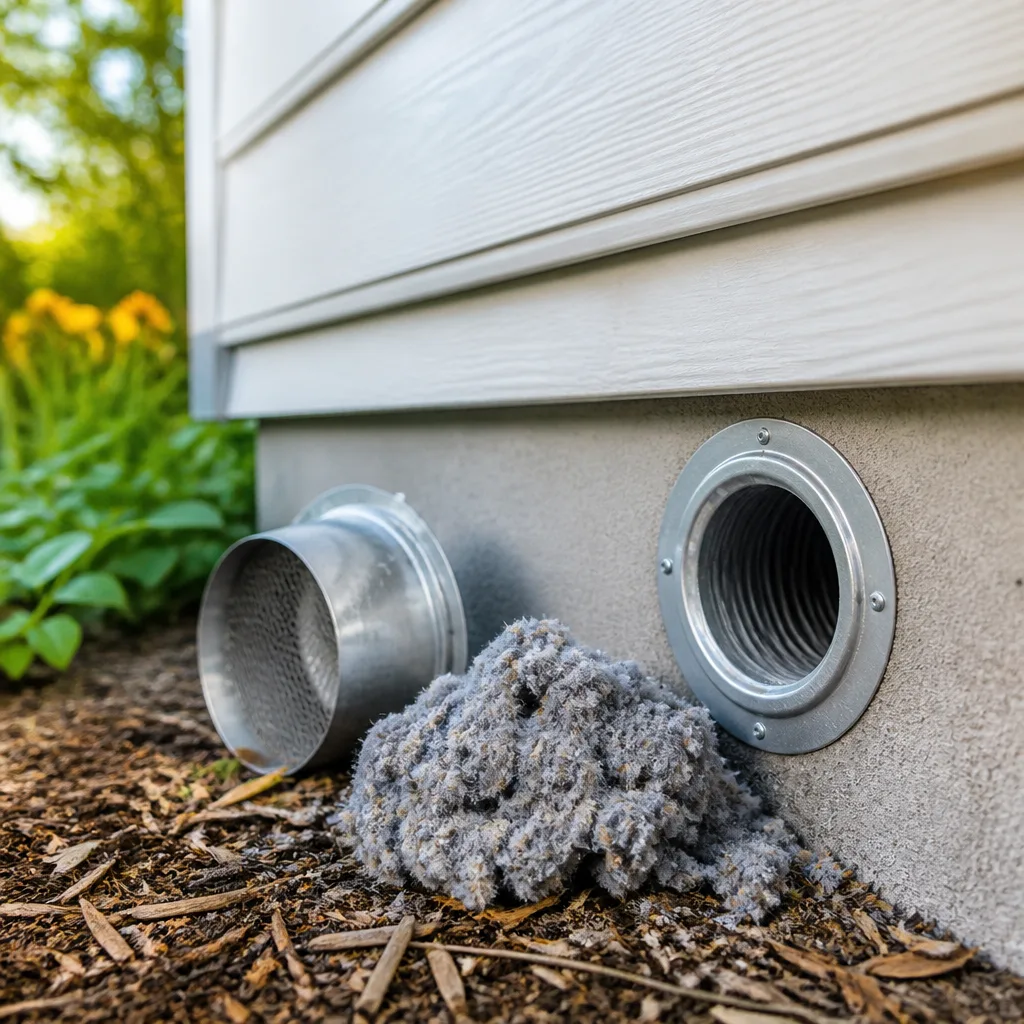 Dryer vent cleaning
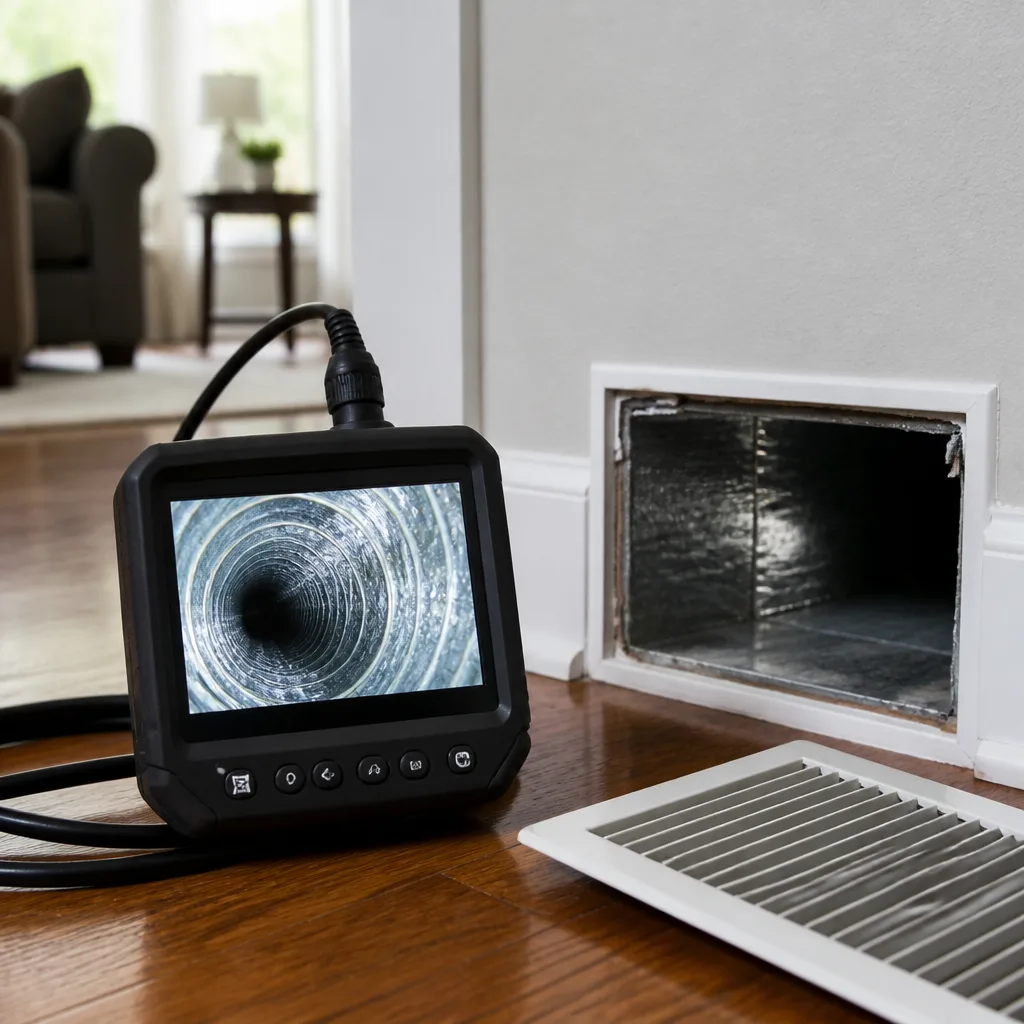 Camera inspection
 Sanitizing & deodorizing
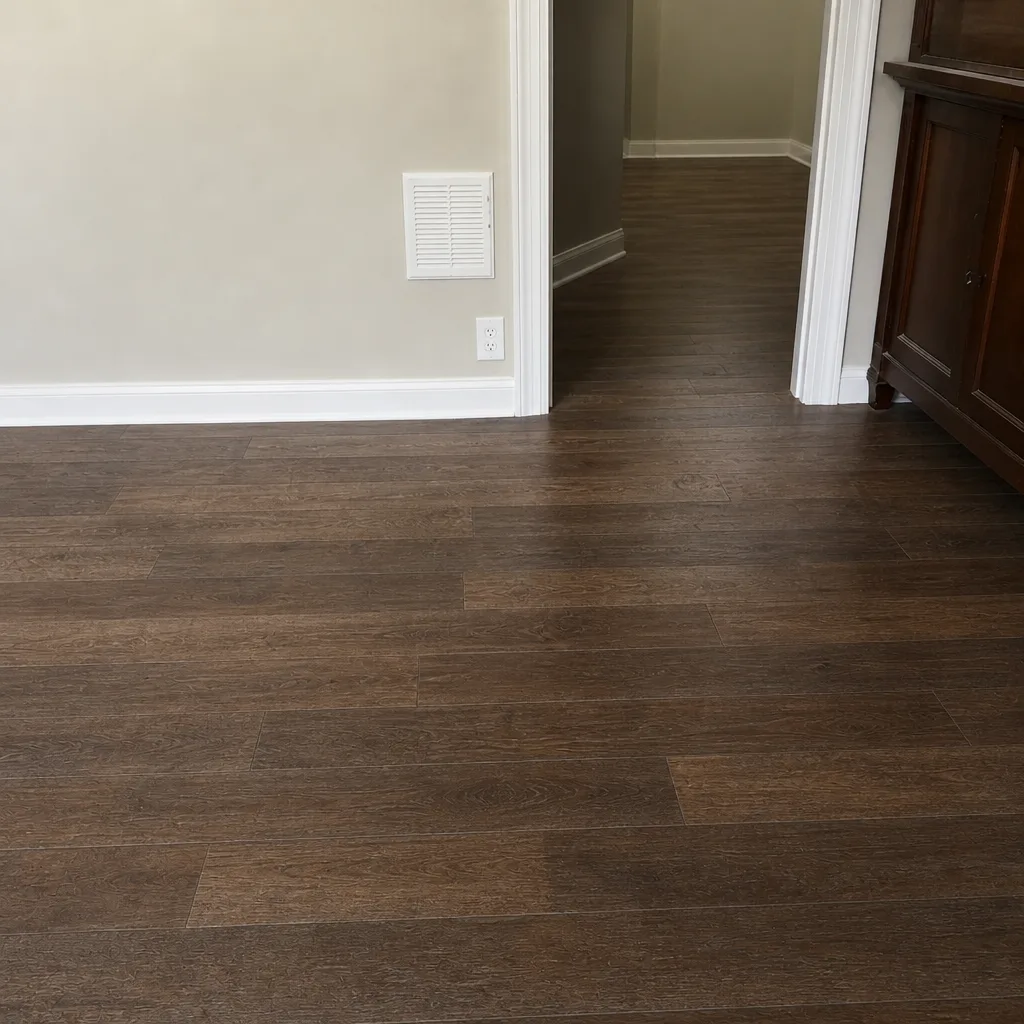
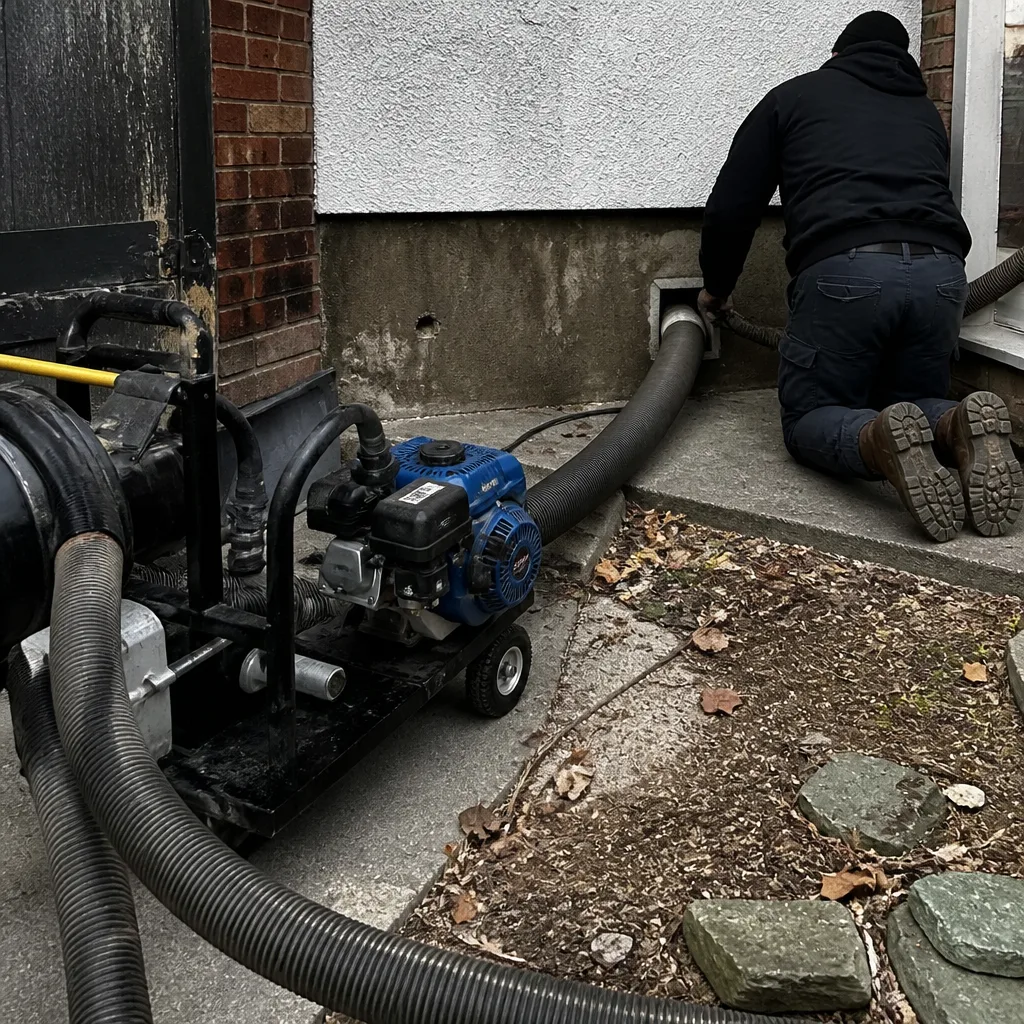
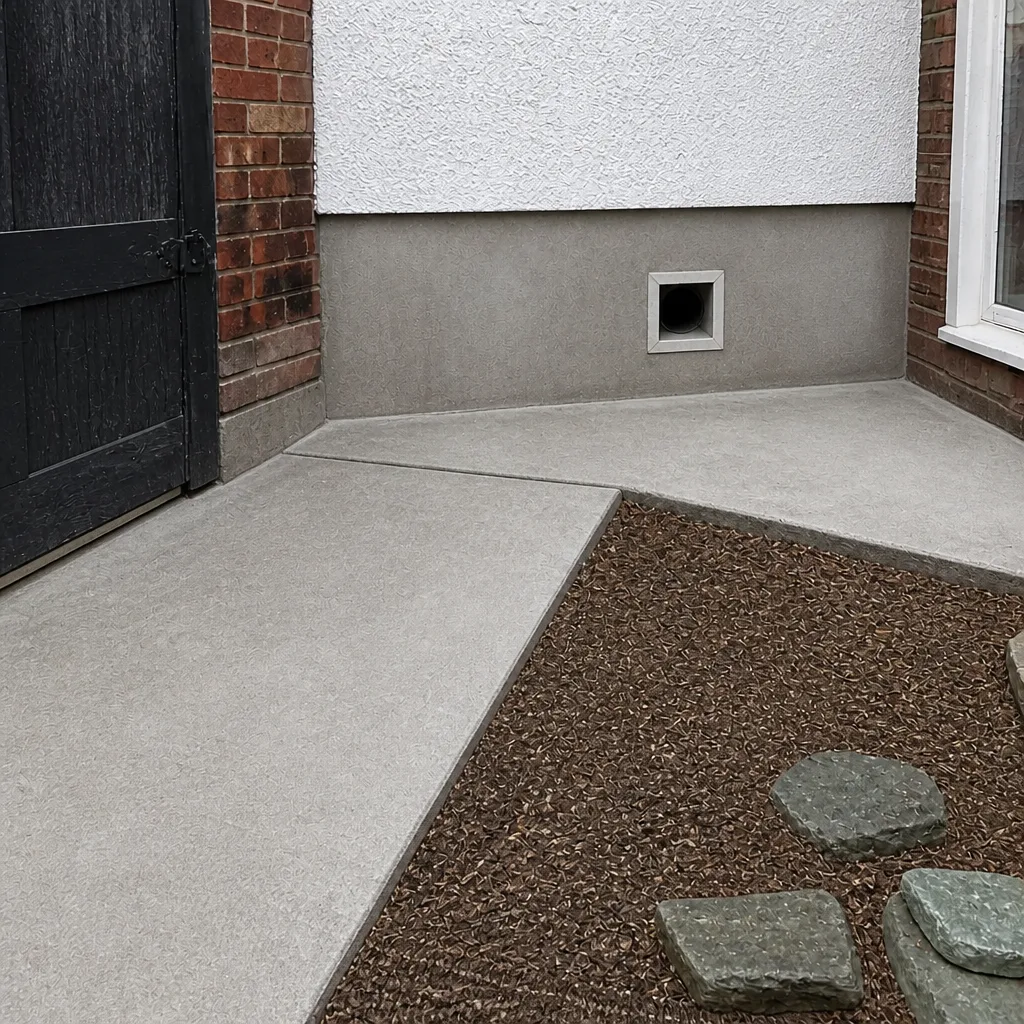
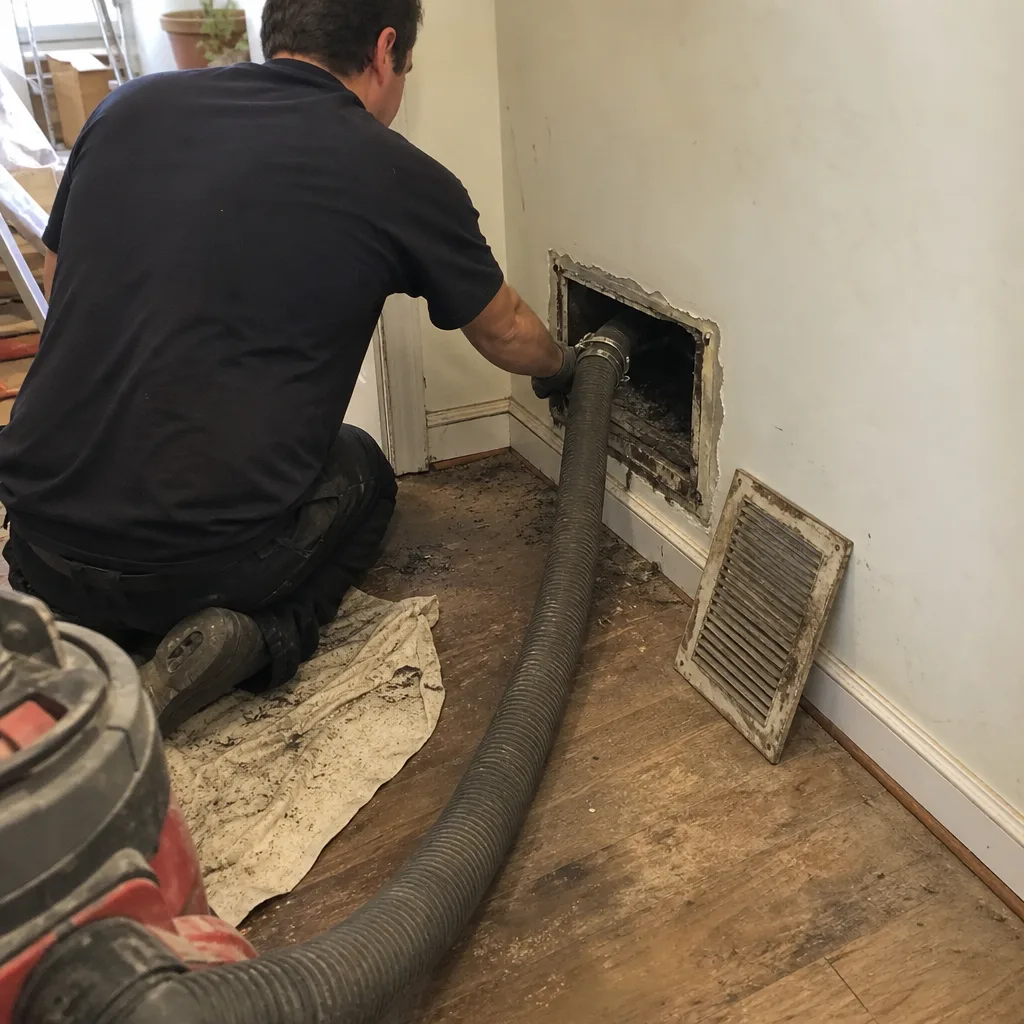
Whole-system duct and dryer vent check with before-and-after photos - you see exactly what came out of your vents
That "$99 whole-house special" is a bait ad - the real number appears once they are in your hallway, or the "clean" is a shop-vac at the register. We photograph the inside of your ducts before and after instead.
Air Duct Cleaning Warning Signs: A Fishtown Homeowner’s Reference Guide
Most guides to duct problems point at the obvious stuff: mold on a vent cover, dust puffing out when the heat kicks on, a smell you can’t place. By the time those show up, the contamination has usually been building for a while. The signals that matter most are quieter. A heating bill that creeps up 15% with no rate change and no thermostat adjustment is a documented indicator of restricted airflow, and restricted airflow in a forced-air house is usually a duct problem before it’s a furnace problem. This guide covers those early, subtle indicators as they show up in Fishtown homes specifically, so you can act before a small restriction turns into an air quality or equipment issue. We’ll walk through bill anomalies, room-to-room temperature mapping, filter loading patterns, odor timing, and the post-renovation window that catches a lot of Fishtown homeowners off guard.
Quick Answer
The warning signs of air duct contamination in Fishtown are: a heating or cooling bill that climbs 15% or more without a rate or thermostat change, rooms that never match each other in temperature, filters that load heavily in the center or show dust bypassing at the edges, odors that appear only at system startup, and visible debris after a renovation. Any two of these together usually means restricted or leaking ducts, and a professional inspection is the next step. Visible mold or dust blowing from vents are late-stage signs, not early ones.
Styles & brands we work with
- Whole-home duct cleaning
- Dryer vent cleaning
- Camera inspection
- Sanitizing & deodorizing
Table of Contents
- The Energy Bill Anomaly: Your First Real Clue
- Uneven Room Temperatures and How to Map Them
- What Your Filter Loading Pattern Is Telling You
- Odor Timing Analysis: Startup Smells vs. Continuous Smells
- The Post-Renovation Warning Window
- Static, Dust Re-Settling, and Other Quiet Indicators
- How a Professional Inspection Actually Works
- Deciding What to Do Next
The Energy Bill Anomaly: Your First Real Clue
A heating bill that rises 15% or more with no rate change and no thermostat adjustment is the single most reliable early warning sign of restricted airflow in a duct system. That’s the number worth writing down. When ducts narrow with debris buildup or separate at a joint, the blower has to push harder and run longer to move the same volume of air. Your furnace isn’t working harder because it’s failing. It’s working harder because it’s being asked to heat a house through a partially blocked delivery system.
Here’s how to read the signal without overreacting to normal seasonal swings. Pull three years of comparable months from your utility record, not just last month versus this one. Compare the same month year over year and note whether the thermostat setpoint and household occupancy were roughly the same. A 15% jump in a matched comparison is worth investigating. A 30% jump is worth calling someone.
- Under 10%: Normal seasonal variation or a rate change. Note it and move on.
- 10% to 15%: Borderline. Check your filter first, then look at return-air grilles for visible dust.
- 15% or more: Investigate duct restriction or leakage. This is the threshold where professional inspection pays for itself.
- Sudden jump after a renovation: Almost always construction debris in the return side.
In Fishtown, this signal gets muddied by the housing stock. Many row homes in the neighborhood were built long before forced-air systems existed, which means the ductwork was retrofitted into spaces that weren’t designed for it. Short runs, tight return paths, and ducts routed through narrow chases all make a Fishtown system more sensitive to debris buildup than a house with generous, purpose-built duct runs. A small amount of restriction causes a bigger runtime penalty here than it would elsewhere.
One more thing worth checking before you call anyone: a dirty blower wheel and a dirty duct system produce nearly identical bill symptoms. If your furnace filter was changed on schedule and the bill still climbed, the restriction is probably upstream in the ducts or downstream at the registers, not at the filter itself. That distinction is the sort of thing our technicians have learned to sort out quickly over up to 11 years of experience on systems just like these.
Uneven Room Temperatures and How to Map Them
Rooms that never match each other in temperature are a duct restriction and leakage indicator, and you can map the problem systematically in about thirty minutes with a cheap thermometer and a notepad. The key is to test at the same time of day after the system has run for at least twenty minutes, so you’re measuring steady-state delivery and not the initial push.
- Number every room in your house, including closets and hallways with registers.
- Set the thermostat to a fixed setpoint and leave it there for at least an hour.
- Place a thermometer at knee height in the center of each room, away from windows and doors.
- Record the reading in each room in the same pass, one right after the other.
- Repeat the whole pass twice on different days to rule out a fluke.
A spread of 3 to 5 degrees Fahrenheit between the warmest and coolest rooms is normal in most forced-air homes. A spread of 6 to 10 degrees points to a problem at one or two specific registers. A spread above 10 degrees usually means a major restriction or a leak that’s pulling conditioned air into a wall cavity or crawlspace.
The pattern matters more than the raw numbers. If the coldest rooms are all at the end of the same duct run, you’re looking at restricted flow through that run. If the coldest rooms are scattered and the warm rooms cluster around the furnace, you’re looking at a return-air imbalance, which is often a debris issue on the return side. If one room is cold only when its door is closed, the return path for that room is undersized, which is common in older Fishtown row homes where rooms were subdivided over the years without adjusting the duct layout.
The specific room map tells the technician exactly where to look. That’s why we ask homeowners to bring their own notes to the inspection; a hand-drawn temperature map of a Fishtown row home tells us more in five minutes than a general “some rooms are cold” complaint tells us in twenty.
What Your Filter Loading Pattern Is Telling You
How your filter loads tells you where the problem is coming from, and the pattern is more useful than the amount. Pull a used filter and look at it under good light before you throw it away. Two patterns matter most, and they mean different things.
Heavy Center Loading
A filter that’s loaded darkly in the center with relatively clean edges means the airflow through the filter is concentrated and the system is pulling hard from the middle. This points to a return duct that’s undersized for the blower, excessive pressure drop across the filter, or a blower that’s pulling more air than the filter can pass. Debris accumulates at the highest-velocity point, which is the center. Over time, the center clogs completely, airflow drops, and the system runs longer to compensate. In Fishtown, heavy center loading is most common in homes where a previous owner installed a high-MERV filter in a system that wasn’t designed for one, which effectively creates the same restriction a duct blockage would.
Edge Bypass and Dust at the Frame
Dust collected at the edges of the filter, or an obviously dusty gap between the filter frame and the filter housing, means air is going around the filter instead of through it. That’s a duct integrity problem, not a filter problem. Bypassed air carries unfiltered debris straight into the blower, the evaporator coil, and the supply ducts. In a row home where the filter slot sits tight against a joist bay, a poorly fitting filter frame will leak around the edges for years without anyone noticing. It’s a common find in Fishtown homes with older return-air chases, and it’s one of the reasons a duct inspection so often turns up dirt downstream of the filter rather than upstream.
Uniform Loading and Almost Nothing
An evenly loaded filter paired with visible dust throughout the house is often a sign of a system with adequate filtration but a separate duct contamination problem. An almost-clean filter in a house that feels dusty is the opposite: it may mean most of the dust is depositing in the ducts, the blower, or the coil instead of reaching the filter. Both patterns are worth a closer look, and neither one means the ducts are fine.
Odor Timing Analysis: Startup Smells vs. Continuous Smells
When a smell appears tells you more about its source than what the smell is. A smell that shows up only in the first one to three minutes after the system starts is different from a smell that’s present steadily all day, and they point to different contamination sources.
Startup-only odors come from the moment air first moves through a system that’s been sitting. The most common cause is dust and debris on the heat exchanger, the electric heat strips, or the blower housing getting warmed for the first time in a while. If the smell is metallic or “hot dust,” it’s the heat exchanger surface. If it’s musty and brief, it’s typically debris on the outside of the evaporator coil or the inside of the plenum. A startup smell almost always fades within a few minutes and doesn’t return until the system cools off again. That’s the tell.
Continuous odors come from something in the airflow path that’s actively producing the smell while air moves past it. That’s a different animal entirely. Persistent musty odors suggest microbial growth in the ducts, the coil, or the drain pan. Persistent chemical odors suggest a contaminant source that needs to be identified before duct cleaning begins. A smell that’s worse in one room than another tells you which branch of the duct system is carrying the source.
- Musty smell at startup, gone in two minutes: Likely coil surface debris. Clean the coil and inspect the plenum.
- Musty smell that never leaves: Likely growth inside ducts or a drain pan issue. Needs inspection and possibly sanitizing.
- Chemical or solvent smell: Investigate the source before cleaning. Cleaning alone won’t fix a smell that’s coming from an active contaminant.
- Smell in one room only: That branch of ductwork is carrying the source. Look at the branch, not the whole system.
In a Fishtown row home, musty continuous odors often trace back to a humid basement or crawlspace that shares a return path with the living space. That’s a structural issue as much as a duct issue, and it’s the reason duct repair and sealing is in our scope rather than duct cleaning alone. Sealing the leak removes the path, and cleaning the ductwork removes what’s accumulated. One without the other leaves the problem half-solved.
The Post-Renovation Warning Window
The four weeks after a renovation are the highest-risk window for duct contamination in any home, and Fishtown sees a lot of it because so many older row homes are constantly being updated. The debris generated by construction doesn’t behave like normal household dust. It’s finer, more abrasive, and often heavier, and each type behaves differently once it enters the duct system.
Drywall dust is the biggest concern. It’s micro-fine, it doesn’t settle quickly, and it carries a mildly alkaline pH that can etch a blower wheel or coat an evaporator coil. Drywall dust pulled into a return during a renovation can travel the entire system before it deposits, and once it settles in the supply ducts, ordinary filtration won’t lift it back out. If you had drywall work done and the supply registers show white dust within a few weeks, the ducts almost certainly need professional cleaning, not just a filter change.
Fiberglass is the second concern. Insulation fibers are larger than drywall dust but lighter, and they tend to collect on the inside of rigid ductwork rather than traveling all the way through. Fiberglass in ducts is a sign that a return path is pulling from a cavity that shouldn’t be open to the system. That’s a duct integrity issue and a repair-and-sealing job, not just a cleaning job.
Wood dust and sawdust are heavier and settle faster than either of the above. They usually show up in the returns and the blower compartment, and they can be removed with a standard cleaning if caught quickly. Left in place for a season, they mix with normal household dust and become much harder to fully remove.
- Close returns during the noisiest phase of the work. Tape cardboard over return grilles before drywall dust starts flying.
- Check every register as soon as the job is done. Pull the covers and look inside with a flashlight.
- Change the filter immediately. Do it again after two weeks and again after a month.
- Schedule a duct inspection if you see visible drywall dust anywhere in the supply runs.
The good news is this window is manageable. Professional cleaning after a renovation is far less invasive than cleaning a system that’s been slowly loading with construction debris for years, and it’s the difference between a clean system and one that runs a little less efficiently for the next decade.
Static, Dust Re-Settling, and Other Quiet Indicators
A handful of subtler signs round out the early-warning picture. None are conclusive on their own, but stacked together they make a strong case for inspection.
- Dust that returns within days of cleaning. If you dust a shelf on Monday and it’s dusty again by Thursday, the dust isn’t coming from the air in the room; it’s being delivered through the ducts. That’s a supply-side contamination problem.
- Static shocks at the register. Dry ductwork with a heavy dust load holds a static charge, especially in winter when the house is dry. A shock when you reach toward a supply register is a small but real clue.
- Visible debris on diffuser vanes. Look at the angled slats inside a supply register with a flashlight. Debris accumulating on the vanes means air is carrying debris through that register.
- Airflow that “feels weaker” at some registers. Hold a tissue up to each register and compare how strongly it flutters. If one register is noticeably weaker than the others, that branch is restricted.
- Duct noise that’s changed character. A rumbling or whistling that wasn’t there a year ago points to a change in pressure or a joint that’s partially separated.
- A dryer that needs two cycles. That’s a dryer vent issue more than a duct issue, but it’s the same underlying story: lint and debris accumulating where air needs to move. If you’re noticing this, it’s worth scheduling dryer vent cleaning before it becomes a fire risk.
Stack three or more of these together and the pattern is difficult to dispute. One alone might be coincidence. Three is a system telling you something.
How a Professional Inspection Actually Works
An inspection is where several of the early signs get confirmed or ruled out. Most homeowners have never watched one, so here’s what a real inspection involves and what tells a professional tech where to look first.
- Register-by-register airflow test. A calibrated flow meter goes at every supply and return. That gives us a map of where the system is delivering air and where it isn’t. It’s the fastest way to find a restricted branch.
- Camera inspection of the main trunk lines. A small camera on a flexible rod goes into the main runs. Debris loading, joint separations, and any biological growth are all visible from inside the duct, which is something a homeowner can’t see from a register.
- Blower compartment and coil inspection. The blower wheel and evaporator coil are where the “system runtime penalty” actually shows up. A dirty blower can be half-blocked without a homeowner noticing until efficiency drops badly.
- Filter and return-path review. We look at the same filter pattern you looked at, and we look at the frame and housing for the bypass issue that causes contamination to begin with.
- Video and photos. You see what we see, before any cleaning begins.
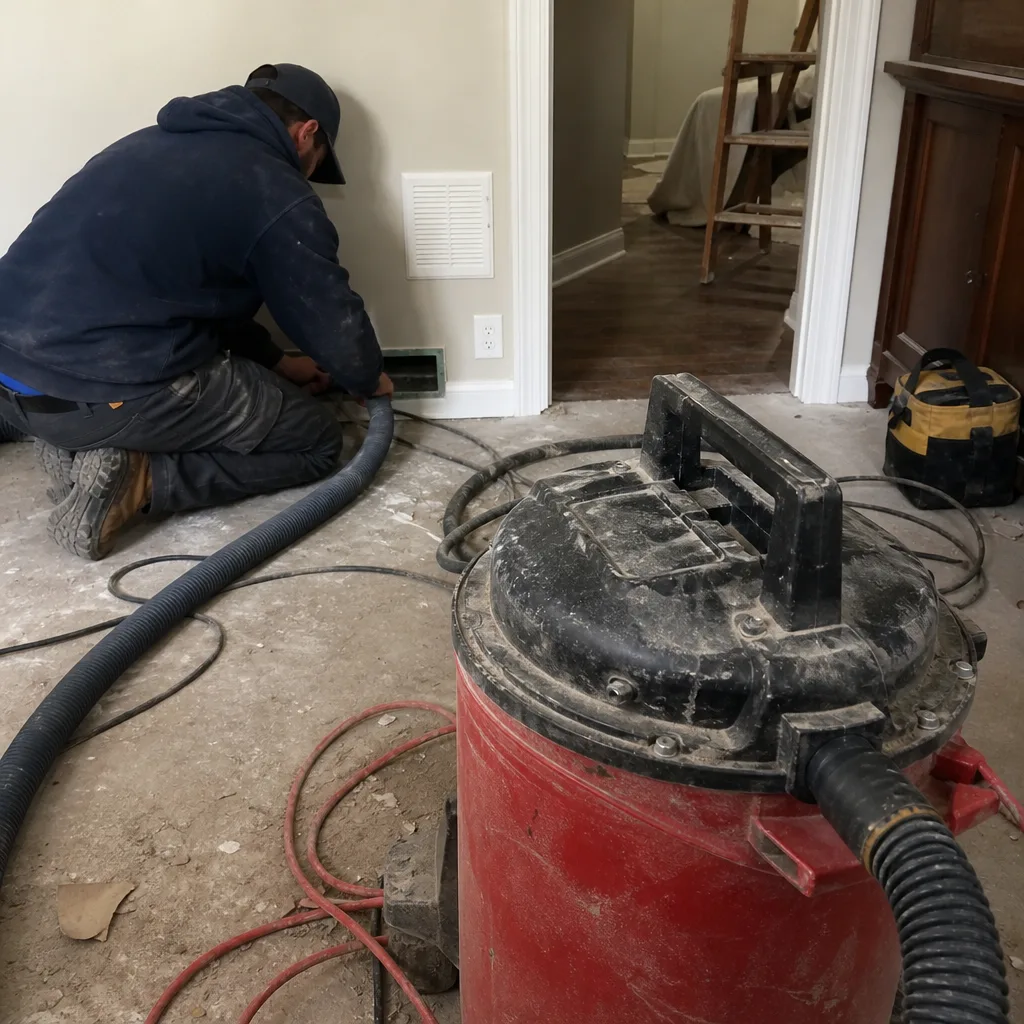
This is the point where professional-grade equipment matters, and it’s a difference worth understanding before you call anyone. Consumer-grade vacuums and shop vacs can’t generate the airflow needed to lift settled debris out of a duct run; they just stir it. Our air duct cleaning is done with Rotobrush and Nikro equipment, the same tier used by commercial HVAC contractors, plus Abatement Technologies gear for heavy contamination situations. That’s what lets us remove what’s in the duct rather than just disturb it. Our technicians also work with Honeywell and Aprilaire air quality systems, which means the filtration and humidity side of your system gets reviewed as part of the same visit, not left for someone else to sort out.
If the inspection turns up a separated joint, a crushed run, or a return that’s open to a cavity, we can carry out duct repair and sealing in the same visit as the cleaning rather than leaving the gap for later. You can see the full scope of HVAC cleaning service on the service page.
Deciding What to Do Next
The right decision depends on how many signs you’re seeing and how long they’ve been there. Here’s a simple decision framework.
- One sign, present for less than a month: Change the filter, look at returns for visible dust, and recheck in thirty days.
- Two signs, or one persistent sign for three months: Schedule an inspection. The cost of inspection is small compared to running a restricted system through a season.
- Three or more signs, especially with a bill jump above 15%: Get the system inspected before any further maintenance call. Duct cleaning is the likely outcome, and possibly duct sealing alongside it.
- Post-renovation, with visible drywall dust: Skip the wait. Clean before the debris settles completely.
- Any time you see mold or smell a continuous musty odor: Treat it as urgent. Air quality is on the line, not just efficiency.
Waiting almost never makes a duct problem cheaper. Contamination compounds, joints separate further under pressure, and any moisture source that’s feeding growth gets more time to do it. The most useful thing a homeowner can do with the early signs this guide covers is act on them quickly, while the fix is still a cleaning and not a repair.
Common Mistakes to Avoid
- Treating a bill jump as a furnace problem first. A 15% climb with no rate or thermostat change is a duct signal, not a furnace signal. Call a duct specialist before you authorize an expensive furnace repair.
- Replacing a filter with a higher-MERV one without checking the system. High-MERV filters can create the exact pressure drop a dirty duct does, which makes the bill problem worse.
- Ignoring a filter that’s still “clean.” A clean filter in a dusty house can mean the debris is depositing in the ducts and the blower, not that the system is clean.
- Skipping the duct inspection after a renovation. Drywall dust is the worst offender in a Fishtown row home, and a cleaning right after the work is far easier than a cleaning two years later.
- Hiring on the lowest price without asking about equipment. Shop vacuums and consumer-grade equipment don’t remove settled duct debris. Ask what equipment will be used on your system.
- Cleaning without repairing. If the inspection finds separated joints or returns open to a cavity, cleaning alone leaves the same contamination path in place. Sealing has to follow.
- Waiting for visible mold or dust blowing out of vents. Those are late-stage signs. By the time they show up, the system has been losing efficiency for a while.
See the difference
 Before
 After
 Before
 After
 Before
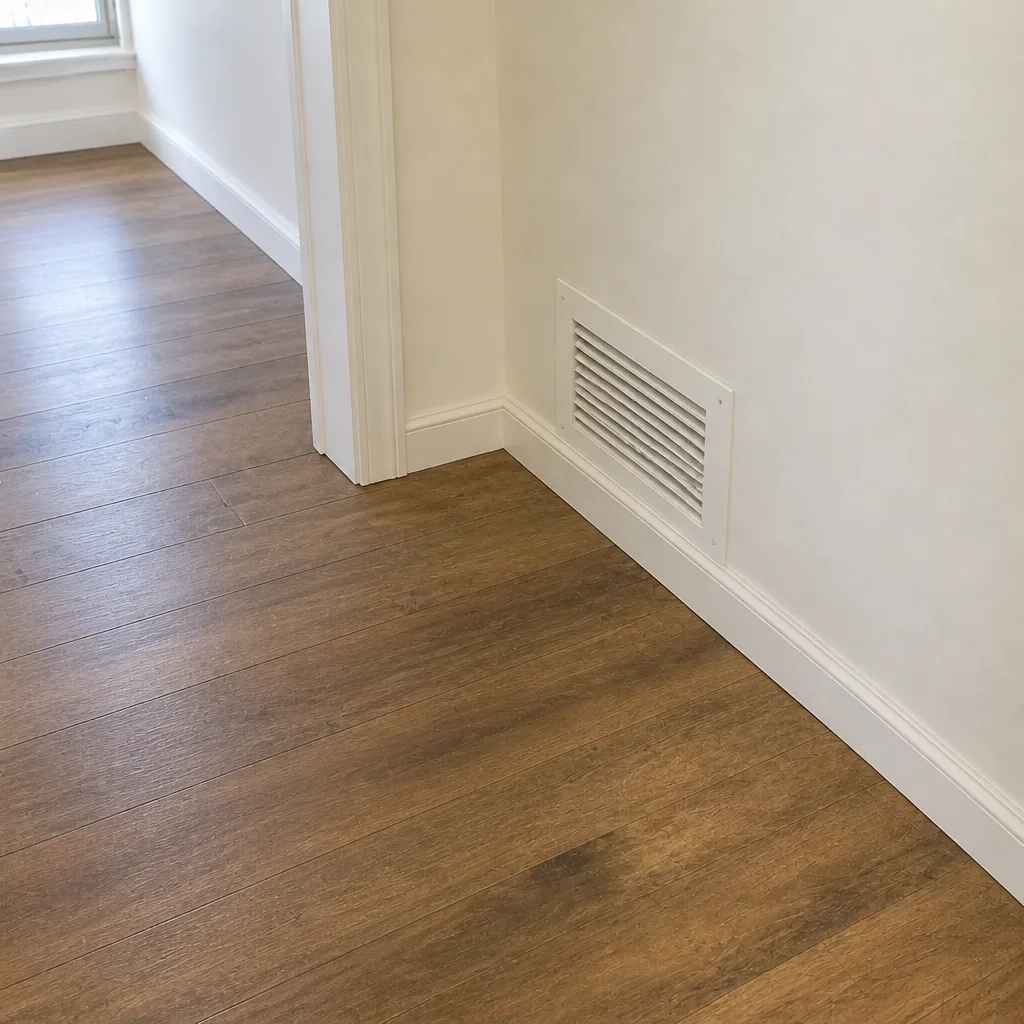 After
When to Call a Professional
Call when you’ve matched two or more of the early signs in this guide, when your heating or cooling bill has climbed 15% or more without an obvious explanation, when your filter loads heavily in the center or shows bypass at the edges, when a smell starts at system startup or never leaves, or when a renovation has left visible dust in the ducts. Call sooner if you see mold, smell a continuous musty odor, or your dryer has started taking two cycles. Duct problems compound with time, so the earlier the inspection the better the outcome. The local pro is licensed and insured as their state requires, and you’ll get a flat price per system agreed before any work begins, plus before-and-after photos of your own ducts when the job is done. Air Duct Cleaning Fishtown offers free estimates in Fishtown: call (855) 337-1165. We answer 24/7. Fast dispatch from 7am to 7pm, Sunday through Friday.
Frequently Asked Questions
Costs vary with system size, the number of runs, and how heavy the contamination is, which is why we price per system rather than per vent. You’ll get a written estimate with a flat price per system agreed before work starts, and that written estimate sets the final price. Call (855) 337-1165 for an exact quote; estimates are free.
Cheap quotes usually reflect cheap equipment. Shop vacuums and consumer-grade machines aren’t built to lift settled debris out of a duct run, so a low quote often reflects a surface pass rather than a real cleaning. Ask what equipment will be used before you book; a company that can’t name its equipment is telling you something. Call (855) 337-1165 for a straight comparison.
Ask for before-and-after photos of your own ducts and registers, plus the inspection findings. Any honest company will show you what came out and what went back in. Call (855) 337-1165 and we’ll walk through the process before we schedule anything.
Most homes need it every three to five years, sooner after a renovation or if there’s a pet, smoker, or high-dust household. Fishtown row homes with retrofitted ductwork often fall on the shorter end because of the tighter runs. If you’ve seen two or more signs in this guide, that’s a stronger signal than any calendar. Call (855) 337-1165 for a free estimate.
Yes. Restricted airflow forces the blower to run longer to deliver the same heat or cooling, which shows up as a bill increase without a rate change. A 15% climb is the threshold worth investigating. Call (855) 337-1165 to get the system checked.
Cleaning removes what’s inside the ducts. Sealing closes the leaks and separations that let contamination back in and cause energy loss. If your filter shows bypass at the edges or your inspection reveals separated joints, you need both. The inspection tells you which. Call (855) 337-1165 for a free estimate.
The Bottom Line
The early signs of duct contamination look nothing like the dramatic ones. A 15% bill climb, uneven room temperatures, an oddly loading filter, a startup-only smell, a small cloud of white dust after a renovation – those are the signals worth acting on, not the mold spot on the vent cover. Map the signs, stack them, and use them to time your inspection. In Fishtown, the row-home housing stock makes every one of those signals more common, and every one of them is fixable with cleaning, repair, and sealing while it’s still small. Get ahead of the problem while it’s a cleaning job and not a repair job. Call (855) 337-1165. We answer 24/7. Fast dispatch from 7am to 7pm, Sunday through Friday.
Written by the team at Air Duct Cleaning Fishtown.