
Last updated November 25, 2026
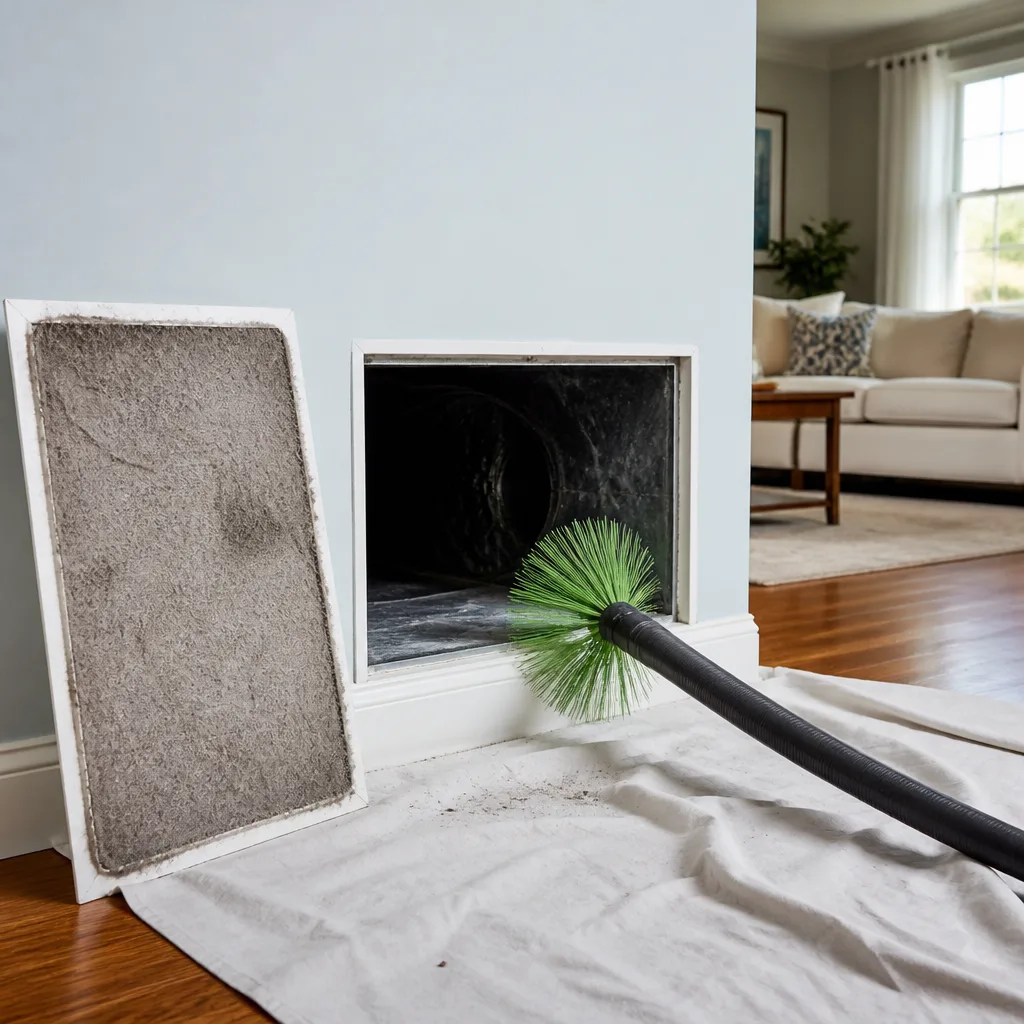 Whole-home duct cleaning
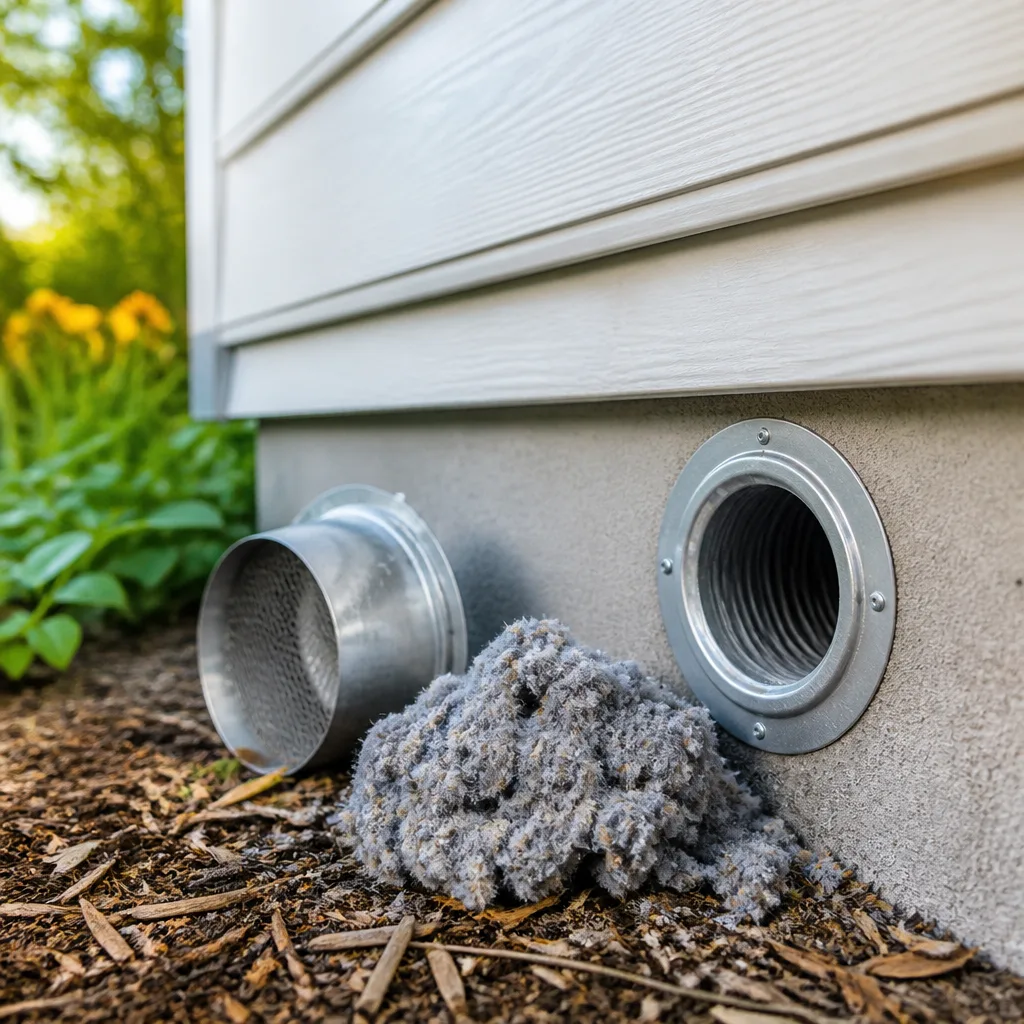 Dryer vent cleaning
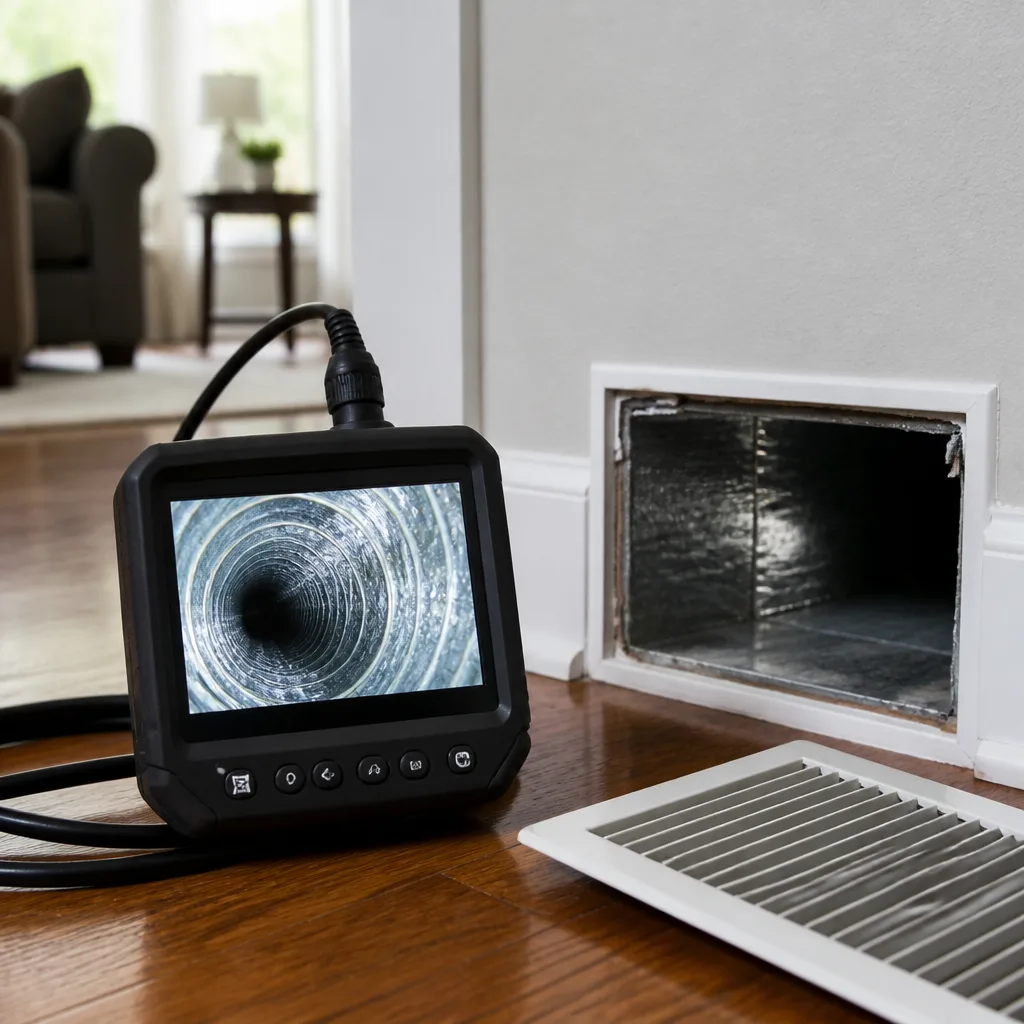 Camera inspection
 Sanitizing & deodorizing
Whole-system duct and dryer vent check with before-and-after photos - you see exactly what came out of your vents
That "$99 whole-house special" is a bait ad - the real number appears once they are in your hallway, or the "clean" is a shop-vac at the register. We photograph the inside of your ducts before and after instead.
DIY vs Professional Air Duct Cleaning: The Fishtown Homeowner’s Decision Guide
A shop vac and a dryer vent brush – the standard DIY duct cleaning setup – operate at roughly 1/20th the negative pressure of a professional truck-mounted system. That single fact changes the entire conversation. Consumer equipment doesn’t clean ductwork so much as stir it: it lifts debris off the walls and re-suspends it, and some of it settles back deeper where you can’t see it. That’s the third outcome nobody talks about in the DIY debate, and it’s often worse than leaving things alone. This guide maps what a Fishtown homeowner can honestly accomplish by hand, what falls outside consumer reach, and how to decide which side of that line your system is on.
Quick Answer
You can clean registers, wash grilles, and wipe the accessible plenum surfaces yourself, and that work is worth doing. But you can’t replicate the negative air pressure a professional system generates, which is the mechanism that actually removes settled debris from the length of the ducts. In a Fishtown rowhouse, the decision usually comes down to one question: is the contamination limited to what you can reach by hand, or does it extend into the duct runs where consumer equipment can’t pull it out?
Styles & brands we work with
- Whole-home duct cleaning
- Dryer vent cleaning
- Camera inspection
- Sanitizing & deodorizing
Table of Contents
- What Negative Air Pressure Actually Does, and Why Your Shop Vac Can’t Match It
- The Legitimate DIY Scope: What You Can Really Accomplish
- When Professional Cleaning Is Non-Negotiable
- Cost-Benefit for a Fishtown Rowhouse Duct System
- How to Tell If a Previous Cleaning Actually Worked
- What’s Different About Ducts in Fishtown Rowhouses
- How to Choose a Professional
What Negative Air Pressure Actually Does, and Why Your Shop Vac Can’t Match It
Professional duct cleaning is a pressure story before it’s a scrubbing story. The tool that matters most isn’t the brush – it’s the vacuum pulling from the other end of the system while the brush loosens material from the walls. That combination is what moves debris out of the house instead of just moving it around inside the ducts.
Here’s the practical difference. A truck-mounted vacuum system generates high airflow and strong static pressure through a large hose sealed to the main trunk. That pressure differential is what lifts fine dust, construction grit, and settled particulate from horizontal runs and carries it into the collection unit. A shop vac connected to a single register is pulling against the whole rest of the system, with open grilles bleeding air in from every other room. The pressure never builds.
How the two setups compare
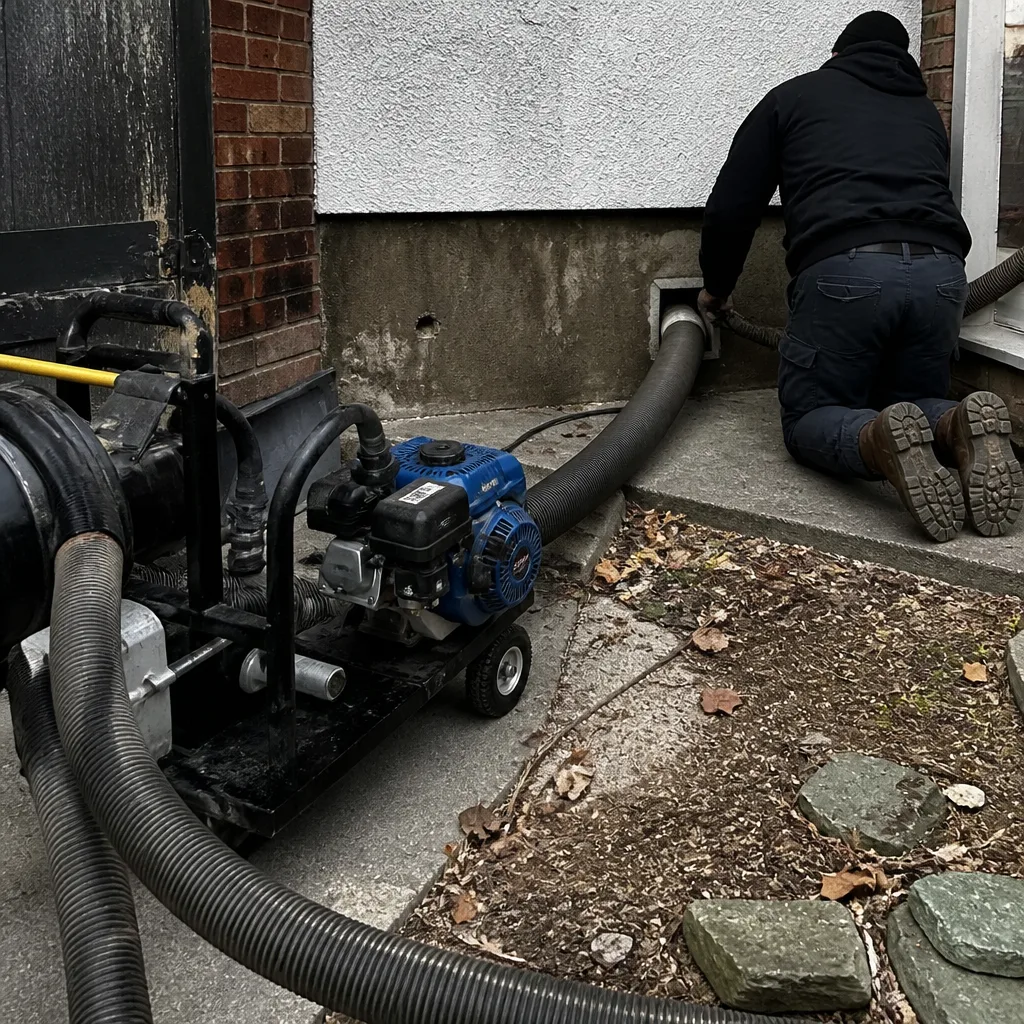
- Source of suction: A truck-mounted or high-volume professional unit seals to the trunk line and pulls the entire system in one direction. A shop vac pulls locally, through one opening.
- Brush action: Professional rotary agitation tools, like the equipment Rotobrush builds for duct interiors, spin compliant brushes through the full length of each run while extraction runs simultaneously. A hand brush reaches what your arm reaches.
- Collection: Professional HEPA-filtration collection contains what’s removed. A shop vac’s filter is downstream of the dust you just disturbed.
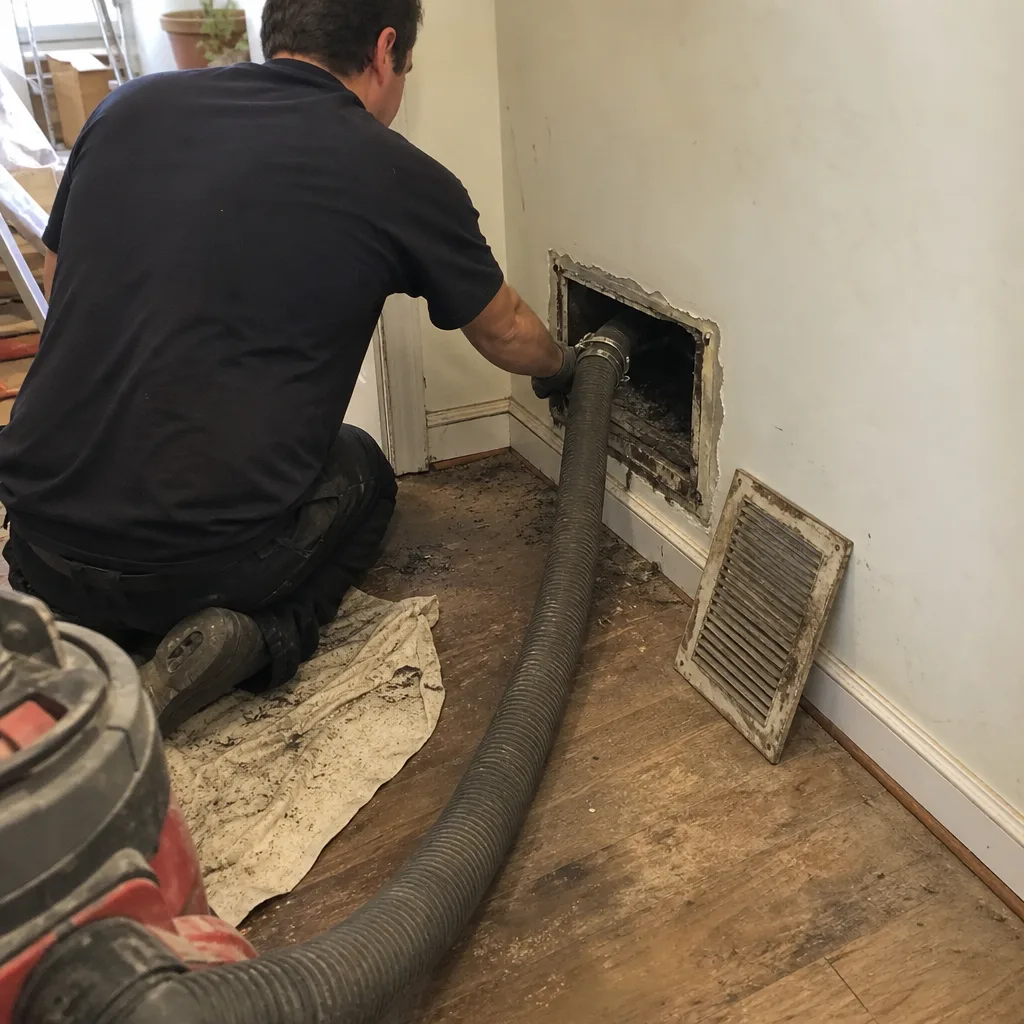
- Access: Professionals cut access points and seal them afterward. A homeowner typically works only through the register openings.
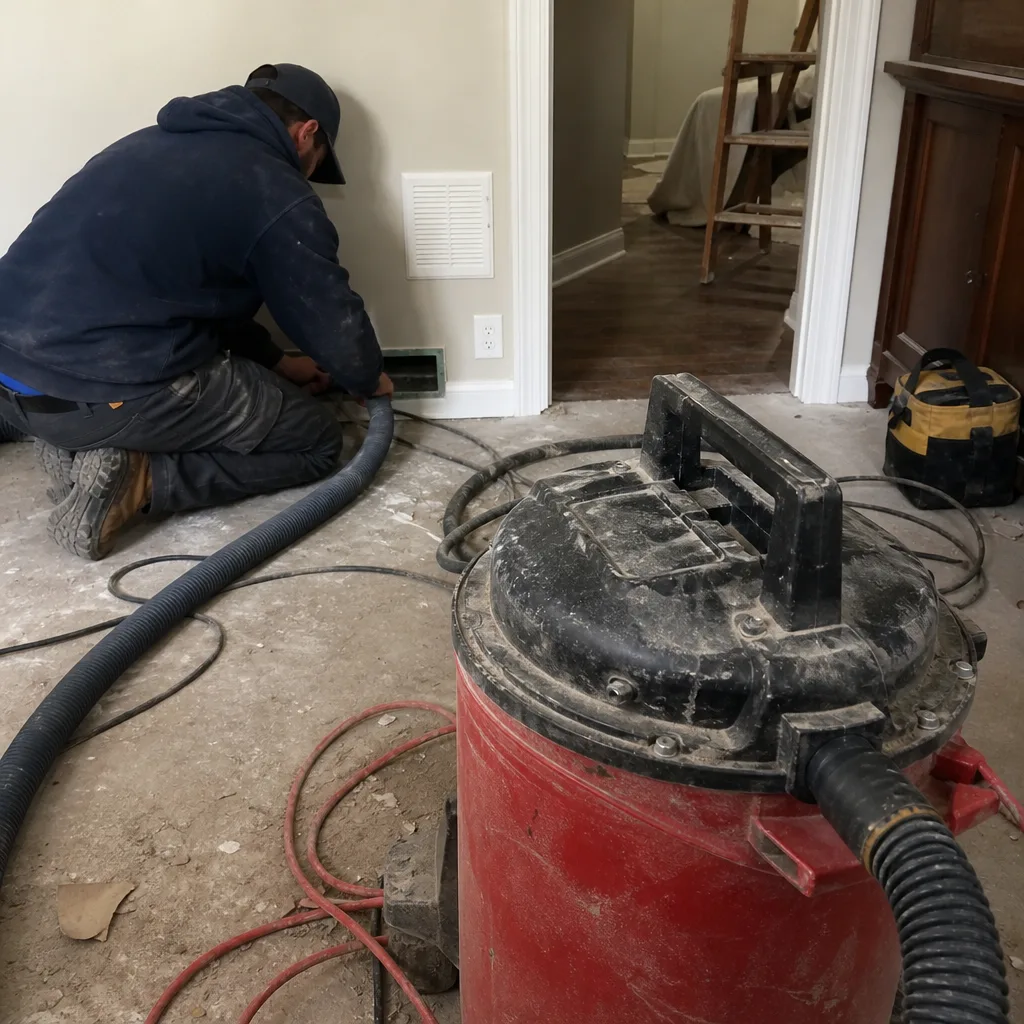
The result of a mismatched attempt is predictable: the surface of the duct looks cleaner from the register, but loosened debris has migrated. In our experience, the worst calls are the ones where a homeowner spent an afternoon with a shop vac and created a fine dust cloud that then settled through the supply runs. That’s a bigger job than the one they started with.
If you want to understand the full professional process end to end, air duct cleaning covers what a proper job involves from inspection through final verification.
The Legitimate DIY Scope: What You Can Really Accomplish
There is real work a homeowner can do, and it isn’t nothing. The line to draw is between surfaces you can physically reach and the interior of the duct system you can’t. Stay on the right side of that line and you’ll improve your air quality and help your system run better.
What’s genuinely worth doing yourself
- Vacuum and wash the supply and return grilles. Grilles collect a visible film of dust, pet hair, and cooking particulate. Pull them, wash them in a tub with mild detergent, dry them fully, and reinstall. This is real surface cleaning with a measurable effect on what blows into the room.
- Wipe the accessible plenum surfaces. The sheet-metal box immediately above the furnace or air handler is often reachable through a service panel. Wiping down the visible interior surfaces with a damp cloth removes a layer of dust that would otherwise get pulled into the airstream.
- Clean the return-air grille and the filter slot. Return grilles get dirtier than supply grilles because they’re pulling in room air. A clean return grille and a properly sized filter that’s changed on schedule do more for indoor air than any DIY duct brushing.
- Check the dryer vent’s exterior termination. Look at the outside flap while the dryer runs. If airflow is weak or the flap barely moves, that’s a signal. A clogged dryer vent is a fire risk, and it’s one of the few vent issues a homeowner can inspect without special tools.
What this work does not accomplish
Register and grille cleaning handles the visible end of the system. It does nothing about the settled debris inside the trunk line, the branch runs, or the transition fittings. It doesn’t touch the return ducting, which is usually the dirtiest part of a residential system because it carries unfiltered room air back to the equipment. And it can’t address buildup on the interior walls of flex or fiberboard duct, where debris mats into the lining.
Think of it the way you’d think about cleaning a gutter from the ground with a leaf blower. You might knock some debris loose. You won’t clean the gutter.
When Professional Cleaning Is Non-Negotiable
There are situations where a DIY attempt isn’t just less effective – it’s the wrong call entirely. In these cases the contamination is either too extensive, too hazardous, or structurally embedded in the system. Here’s when to stop considering DIY.
- Post-renovation debris. Drywall dust, sawdust, joint compound particles, and insulation fibers get pulled into the return system during any significant renovation. This material is fine, abrasive, and it settles deep. It can coat the evaporator coil and blower wheel, and it’s a job for extraction equipment, not a brush. If you’ve just finished a kitchen or bath remodel in your Fishtown rowhouse, this is the moment.
- Confirmed mold growth. Visible mold on duct surfaces or at the registers means moisture is present somewhere in the system. Cleaning without finding and fixing the moisture source just resets the clock. This calls for a professional assessment, and possibly sanitizing after cleaning. Abatement Technologies equipment exists for exactly this kind of contamination scenario.
- Vermin intrusion. Rodent droppings, nesting material, or a dead animal in the ductwork is a contamination event, not a dust problem. Disturbing it with a shop vac aerosolizes pathogens and can make the situation worse. This is a professional job with proper containment and protective equipment.
- Fiberboard duct systems. Some older homes have ductboard or fiberglass-lined duct. The interior lining can fray, trap debris, and even shed fibers if abraded. Brushing it wrong damages the system. A professional evaluates whether the lining is intact before touching it.
- Debris past the register boot. If you can see significant accumulation when you look into the duct past the register opening with a flashlight, you’re already past what hand tools reach. That’s the whole run.
In any of these cases, the honest answer is that DIY is off the table. The cost of a failed attempt is a bigger remediation job afterward.
Cost-Benefit for a Fishtown Rowhouse Duct System
Let’s put the numbers in perspective without pretending there’s a single price for every Fishtown home. Duct system size, number of runs, accessibility, and condition all affect the estimate. What’s consistent is the shape of the decision.
The DIY supply cost side
- A shop vac with decent filtration: an upfront purchase you may already have.
- Duct brush kit or vent brush attachments: modest, but limited in reach.
- Replacement filters, cleaning supplies, drop cloths: small but real.
- Time: an afternoon for partial results, and a real risk of making things worse.
The problem with tallying DIY cost is that it doesn’t capture the risk. If the attempt loosens debris through the supply runs, you’re not looking at a do-over with the same tool. You’re looking at a full professional cleaning plus the possibility of sanitizing afterward – the remediation, not the maintenance.
The professional side
A professional cleaning is priced per job by a written estimate after the technician inspects your actual system. The variables that move the number are the number of runs, whether the system is accessible, whether repairs or sealing are needed, and whether sanitizing is involved. A rowhouse with a compact single-system layout is typically a simpler job than a home with multiple zones. What you’re paying for is the pressure, the containment, the inspection, and the disposal – none of which a shop vac replicates.
The honest framing: DIY cost = supplies + time + probability of an incomplete result. Professional cost = one written estimate for a job that removes the material from the system. When you compare those, DIY only wins when the contamination genuinely doesn’t extend past the registers.
Related work often gets bundled into a single visit. HVAC cleaning addresses the equipment side of the air pathway in the same appointment, which is often where the debris source sits.
How to Tell If a Previous Cleaning Actually Worked
If you’ve already tried a DIY pass, or you’ve had a budget cleaning that left you skeptical, here’s how to evaluate what’s actually in your system now – before you spend another dollar on either approach.
- Check the supply registers after a week of running the system. Wipe the register fins with a white rag. If a fresh film of dust appears quickly, material is still moving through the supply side.
- Look into the duct past the register boot with a flashlight. You’re looking for visible accumulation, debris, or staining on the duct walls. Clean duct interior should look uniform, not textured.
- Inspect the blower wheel and evaporator coil. Through the access panel, look at the blower. If the fins are coated in dust, material is still reaching the equipment. A coil that looks like a carpet means buildup that a register-by-register pass never addressed.
- Watch the airflow at each register. Hold a tissue at the grille. Weak or uneven flow across registers points to a blockage or a duct leak, and both are things a cleaning alone won’t fix. Duct Repair & Sealing closes the gap where leaks and energy loss actually originate.
- Note whether dust reaccumulates on nearby horizontal surfaces. Persistent fine dust settling just after a cleaning means the cleaning didn’t reach the source.
- Ask for documentation. If a previous cleaning didn’t include before-and-after photos of your own system, you have no way to know what was done. That’s a legitimate reason to be skeptical.
If two or three of these checks come up dirty, the previous attempt was incomplete. That’s information, not failure – and it tells you which side of the DIY line you’re on.
What’s Different About Ducts in Fishtown Rowhouses
Fishtown’s housing stock shapes this decision in ways that a generic national guide won’t tell you. The neighborhood is full of older rowhouses, many converted or renovated over the decades, and that history lives inside the ductwork.
The structural realities
- Compact, shared-wall layouts. Rowhouses pack the air handler and duct runs into tight spaces. Access is often through closets and floor cavities rather than a wide-open basement, which makes the professional’s access-point work more important, not less.
- Renovation history. A rowhouse that’s been through two or three kitchen remodels over its life carries the debris from each one. Drywall dust from a renovation twenty years ago is still in the returns.
- Mixed duct materials. Original sheet-metal trunk lines retrofitted with flex branch runs are common. Each material behaves differently under cleaning, and fiberglass-lined sections need a different approach than bare metal.
- Humidity and summer load. Philadelphia’s humid summers keep the air handler working hard and can sustain moisture in poorly insulated or leaking duct runs. Moisture plus dust is the recipe for microbial growth. That’s an argument for finding leaks and sealing them, not for brushing harder.
- Dryer vent runs through old walls. In a rowhouse, the dryer vent path can be long and winding, full of lint-trapping elbows. dryer vent cleaning is often the highest-priority item in a Fishtown home because the run geometry matters more here than in a house with a short straight vent.
The net effect: Fishtown rowhouses tend to have more inaccessible duct length, more renovation history, and more moisture exposure than the typical suburban house the national guides were written for. That tilts the DIY-versus-professional decision toward professional work more often than not.
How to Choose a Professional
If the decision lands on professional cleaning, the next question is how to pick one. This is where the industry’s bait-and-switch reputation comes from, and it’s fair to be cautious. Here’s what actually matters.
- Ask what equipment they use. A company that shows up with consumer vacuums and hand tools isn’t doing professional cleaning, regardless of the price. Ask specifically about rotary agitation equipment and high-volume extraction. Rotobrush and Nikro systems are professional-tier tools built for the job rather than a converted shop vac, and a company confident in its equipment will tell you what it runs. Abatement Technologies systems signal readiness for contamination and air quality scenarios, not just routine dust.
- Ask about the pressure source. Professional cleaning relies on the pressure differential between extraction and the system. Ask how they generate it.
- Insist on one flat price agreed before work starts. Not a per-vent price. Not a teaser figure that grows on the invoice. A written estimate based on the actual system in your home, and the final price matches that estimate.
- Ask for before-and-after photos of your own ducts. Not stock photos. Your system, documented. That’s how you know the work was actually done.
- Ask whether they handle repair and sealing. Cleaning removes debris. It doesn’t close leaks or repair damaged duct. A company that only cleans fixes half the problem. You want a full-system approach that addresses every part of the air pathway.
- Ask about filtration and humidity. A company that works with Aprilaire and Honeywell air quality equipment understands that duct cleaning interacts with filtration and humidity control, not just vacuuming. That’s a sign they’re thinking about the whole system.
- Confirm the pro is licensed and insured as the state requires. That’s a baseline, and it should be easy for them to confirm.
The right provider also covers the entire scope in one visit – cleaning, repair, sealing, sanitizing, and dryer vent service – so you’re not managing three separate contractors and hoping they talk to each other. Air Duct Cleaning Fishtown works across that full scope with professional-grade equipment on every job, and our technicians have up to 11 years of experience. To see the whole picture of what we do, start at Air Duct Cleaning Fishtown.
Common Mistakes to Avoid
- Using a shop vac on the supply registers and calling it cleaned. This is the most common DIY error. It creates a dust cloud that settles through the runs, and in a Fishtown rowhouse with tight returns, that dust has nowhere to go but deeper into the system.
- Brushing fiberglass-lined duct with a stiff tool. If you don’t know what your duct is made of, you don’t know what tool is safe. Abrading fiberglass lining damages it and sends fibers into your airstream.
- Blaming a low-cost cleaning for what it’s designed to miss. A cleaning that never seals to the trunk line and never generates real pressure is a surface job. It wasn’t built to remove settled debris, and the price reflected that.
- Cleaning repeatedly instead of finding the leak. Dust reaccumulating after a cleaning points to duct leaks pulling in air from unconditioned cavities. Recleaning without sealing the source is a cycle.
- Ignoring the dryer vent because the ducts look clean. In an older Fishtown home, the dryer vent run can be longer and more convoluted than the duct system. Weak dryer performance is the symptom, but fire risk is the real stake.
- Skipping the return side. Supply registers get all the attention because they’re visible. The return ducting is usually dirtier because it carries unfiltered room air. Any approach that ignores it is incomplete.
- Not documenting the work. Without before-and-after photos of your own system, you have no way to verify a job or compare attempts. Photos should be standard, not optional.
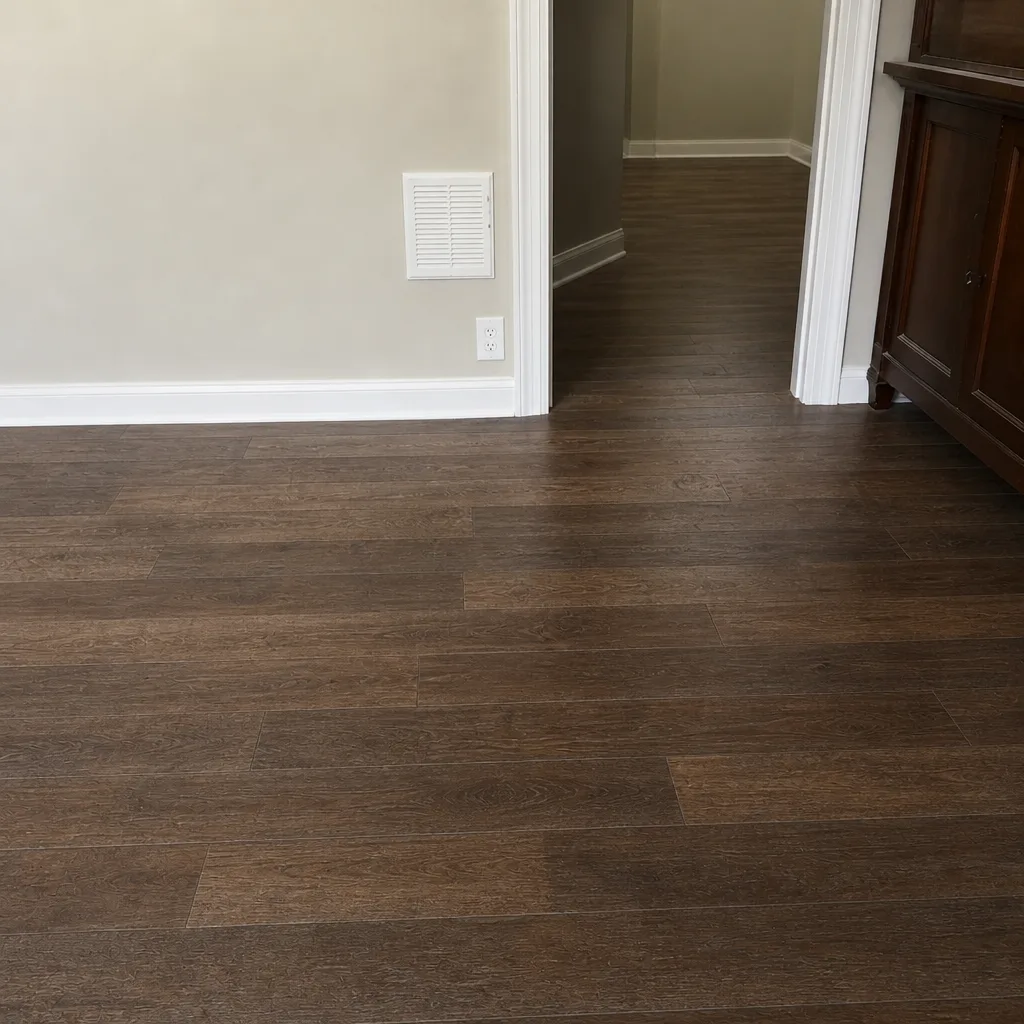
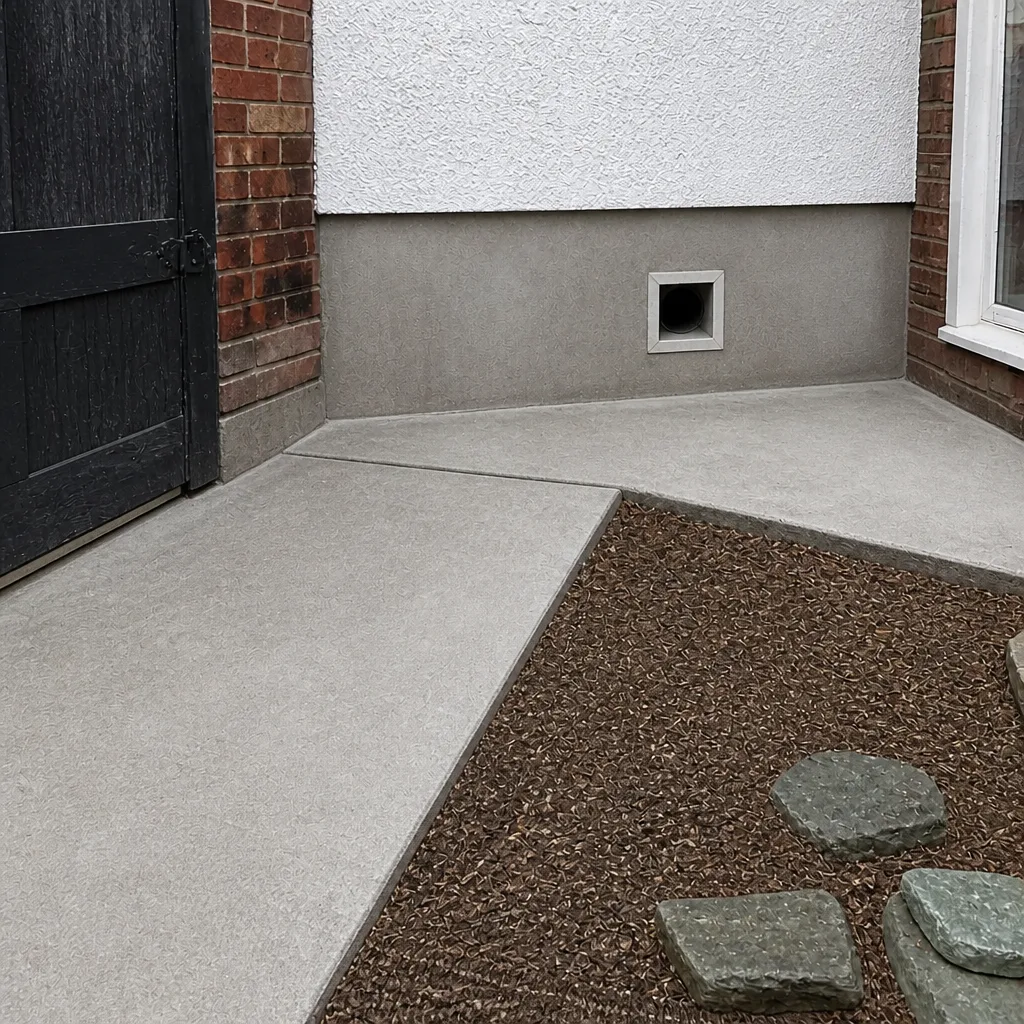
See the difference
 Before
 After
 Before
 After
 Before
 After
When to Call a Professional
Call a professional if the contamination extends past what you can reach by hand, if you’ve had a recent renovation, if you smell mustiness or see visible mold at the registers, if you suspect vermin intrusion, or if your duct system is fiberboard-lined. Those are the situations where a DIY attempt risks making things worse and where professional extraction is the only method that actually removes the problem. Also call if your dryer is taking longer to dry a load than it used to.
Air Duct Cleaning Fishtown offers free estimates in Fishtown. Call (855) 337-1165. We answer 24/7. Fast dispatch from 7am to 7pm, Sunday through Friday, and we’re closed on Saturday.
Frequently Asked Questions
You can clean registers, grilles, and accessible plenum surfaces yourself, and that work is worth doing. You can’t replicate the negative air pressure a professional system generates, so you can’t remove settled debris from inside the duct runs. If the contamination extends past the register opening, that’s a professional job.
A very low quote usually reflects a surface pass with consumer equipment, not full-system extraction. The price gap comes from missing steps: no sealing to the trunk line, no rotary agitation, no real pressure differential, no return-side cleaning, and no sealing access points. The honest way to compare is on the scope of work and whether the price is per job or per vent. Call (855) 337-1165 for a free written estimate that spells out what’s included.
Pricing depends on the number of runs, accessibility, system condition, and whether repair, sealing, or sanitizing is involved. That’s why we price per job after inspecting your actual system rather than quoting a number that fits every home. The written estimate sets the final price, and the estimate itself is free. Call (855) 337-1165 for exact pricing on your rowhouse.
Before-and-after photos of your own ducts. Not stock images, not a generic gallery – documentation of your system, taken during the job. You should also be able to inspect the access points afterward and see that they were sealed. If a company can’t produce photos, that’s a legitimate reason to look elsewhere.
Most homes don’t need it on a rigid schedule. The triggers are events: a renovation, a move-in, a moisture or vermin problem, or visible buildup at the registers. If your returns are pulling in unfiltered air (which is what they’re designed to do), a check every few years makes sense. A rowhouse with recent renovations or a humid basement may need attention sooner.
Sometimes, but not always. Uneven airflow often traces to a duct leak or blockage, which is why Duct Repair & Sealing matters – cleaning alone can’t fix a leak. A musty smell usually points to moisture somewhere in the system, so cleaning should come after the moisture source is found. If either symptom persists after a cleaning, the cause was structural, not just dirt.
The Bottom Line
The DIY-versus-professional question isn’t a fair fight, and it’s not because professionals have better marketing. It’s because cleaning a duct system means generating the pressure to pull settled material out, not just reaching in to stir it. Register and grille cleaning is legitimate work for a homeowner and worth doing. Everything past the register boot needs the equipment the job was designed for. If you’ve had a renovation in a Fishtown rowhouse, if you’re seeing mold or vermin activity, or if you tried a shop-vac pass and a week later the dust is back, that’s your answer. Get a real inspection and a written estimate.
Call Air Duct Cleaning Fishtown at (855) 337-1165 for a free estimate. We answer 24/7. Fast dispatch from 7am to 7pm, Sunday through Friday, and we’re closed on Saturday. Our technicians have up to 11 years of experience, and we work with professional-grade equipment on every job.
Written by the team at Air Duct Cleaning Fishtown.