
Last updated November 25, 2026
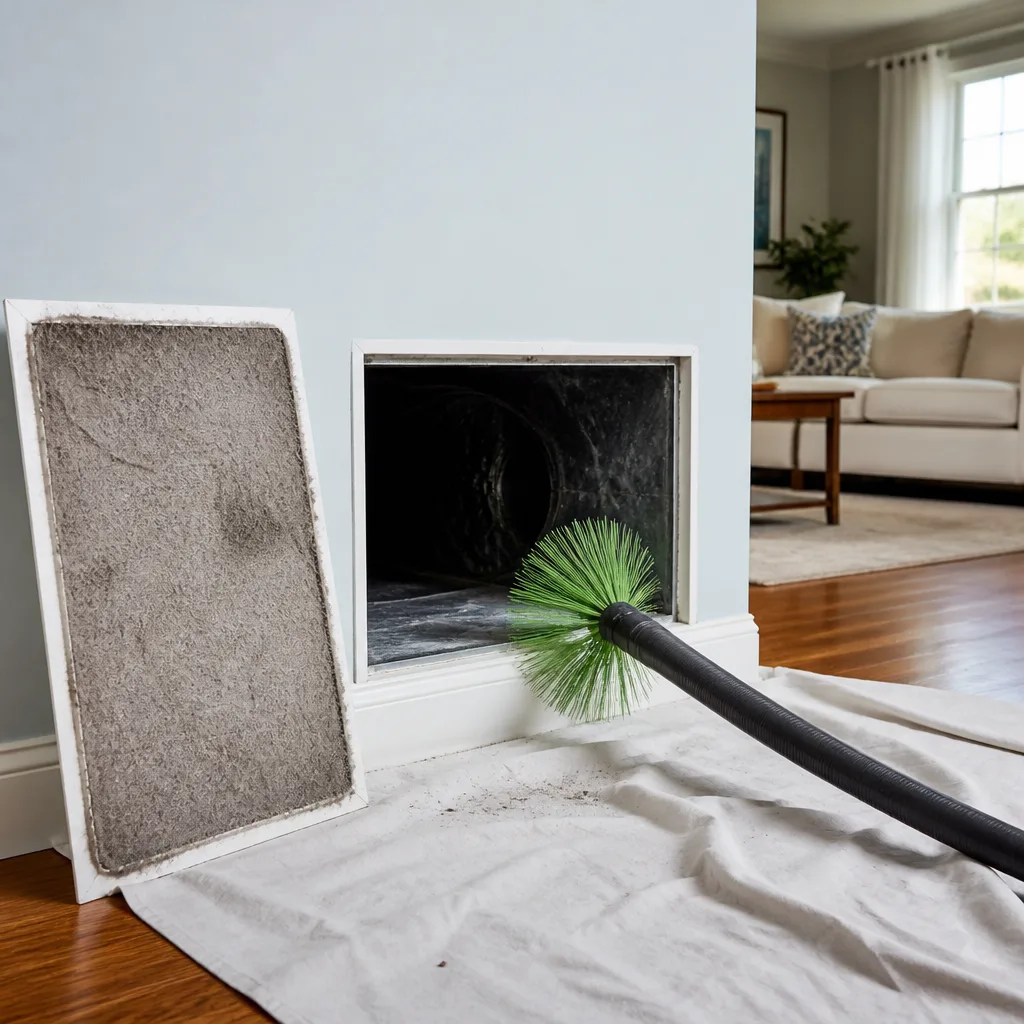 Whole-home duct cleaning
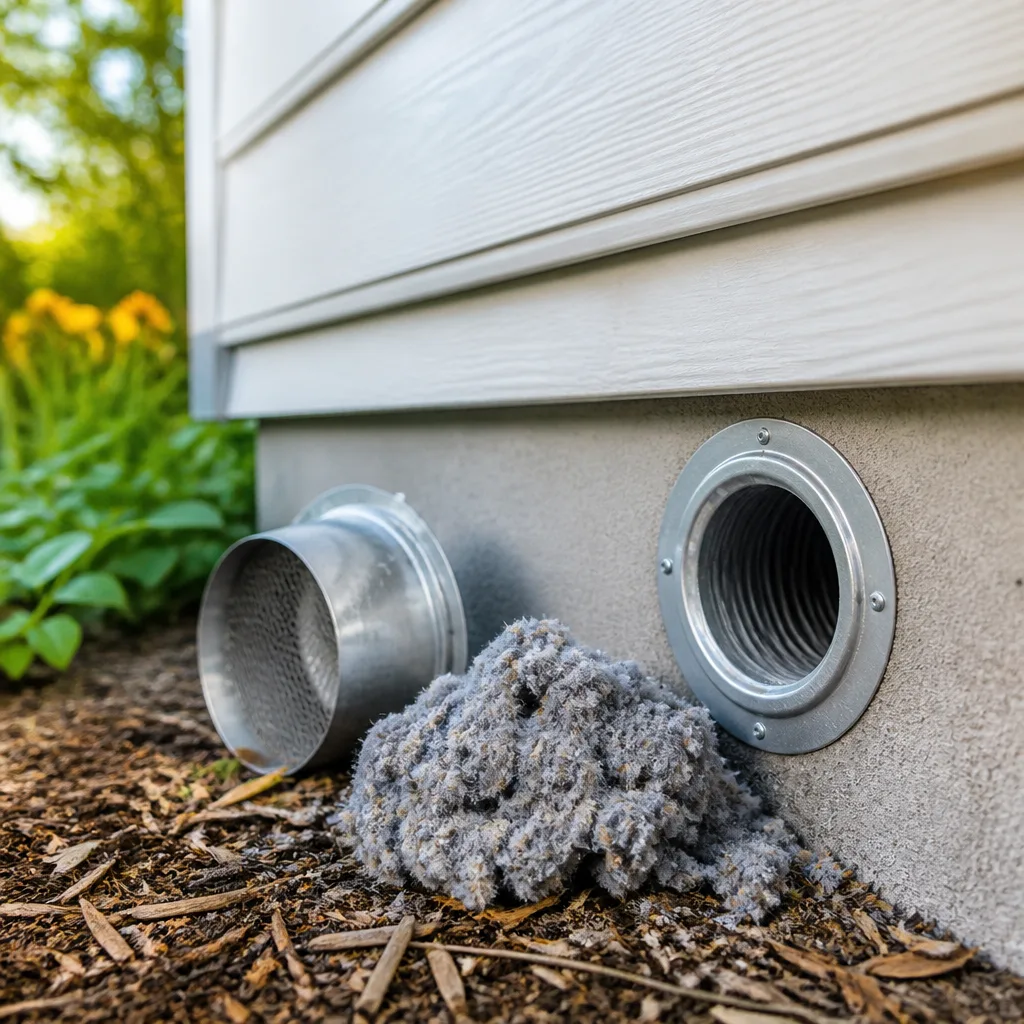 Dryer vent cleaning
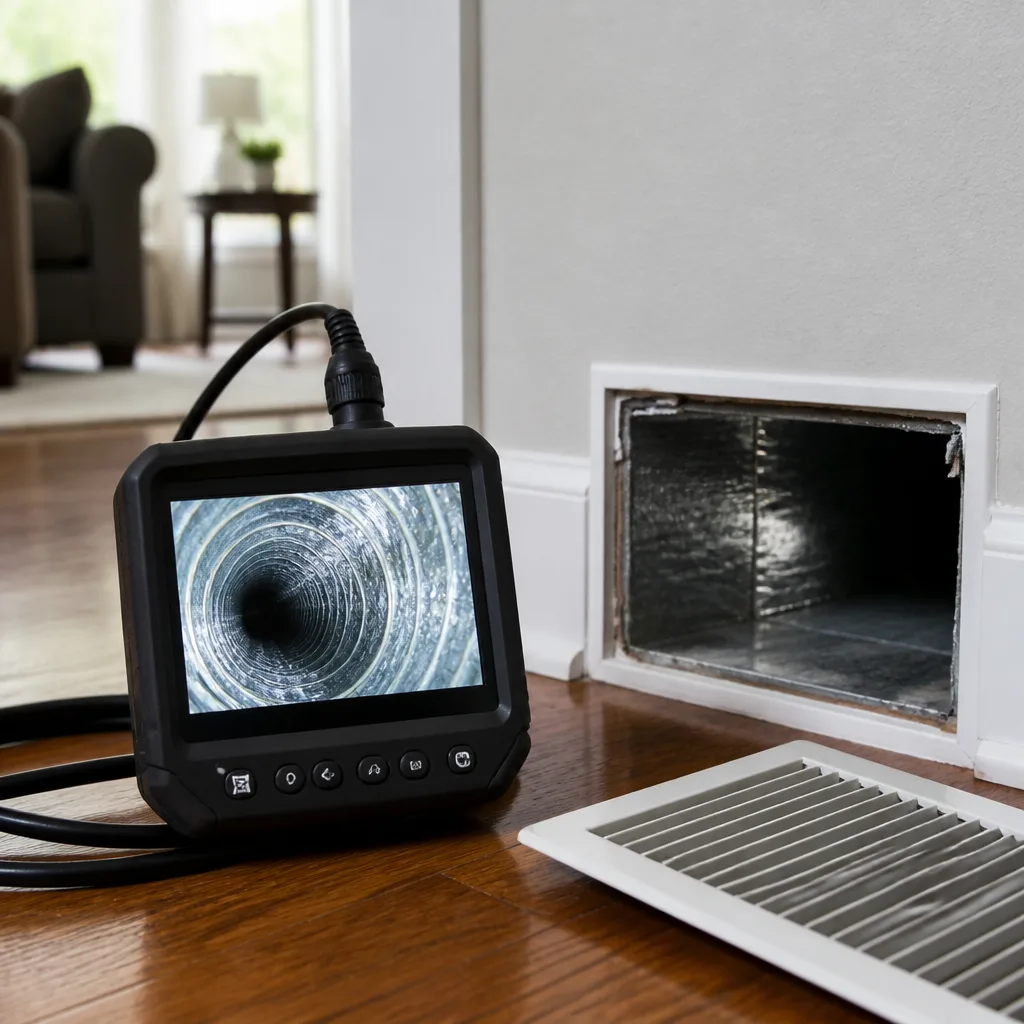 Camera inspection
 Sanitizing & deodorizing
Whole-system duct and dryer vent check with before-and-after photos - you see exactly what came out of your vents
That "$99 whole-house special" is a bait ad - the real number appears once they are in your hallway, or the "clean" is a shop-vac at the register. We photograph the inside of your ducts before and after instead.
How to Hire an Air Duct Cleaning Contractor in Fishtown: A Step-by-Step Guide
Most people assume that any crew with a vacuum hose and a van will leave their ducts cleaner than they found them. The opposite is often true. The EPA has explicitly warned that improper duct cleaning can dislodge and redistribute contaminants that were previously settled, which means a careless job can leave the air in your home worse than before the crew arrived. In Fishtown, where rowhouses mix original 1920s sheet metal with decades of later retrofits, that risk is real. This guide gives you the exact questions to ask, the pricing structures to recognize, and the job-site checkpoints that separate equipment-serious contractors from van operators.
Quick Answer
To hire an air duct cleaning contractor in Fishtown, verify five things before booking: a negative air machine with HEPA filtration, a rotary brush or compressed-air whip system suited to your duct material, camera inspection capability, proof of contamination-containment practices, and a written flat price per system rather than a per-vent quote. Ask for the scope line by line, confirm the contractor follows NADCA’s ACR standard, and watch for register sealing and negative pressure during the job. A legitimate contractor explains the equipment and puts the price in writing before anyone touches your ducts.
Styles & brands we work with
- Whole-home duct cleaning
- Dryer vent cleaning
- Camera inspection
- Sanitizing & deodorizing
Table of Contents
- The Five Equipment Questions to Ask Before Booking
- How to Spot Bait-and-Switch Pricing
- NADCA Membership and ACR Compliance: What It Means in Practice
- What to Watch For During the Job
- Post-Job Verification: Camera Footage and Written Scope
- Fishtown Housing Stock and Why It Changes the Approach
- Why a Full-System Approach Beats a One-Service Call
The Five Equipment Questions to Ask Before Booking
Equipment questions are where a real contractor and a van operator separate fast. Anyone can own a shop vacuum and a hose. The tools that matter on a duct cleaning job are the ones that create negative pressure, agitate debris loose in a controlled way, and capture what comes out. Ask these five questions on the phone, before you book, and listen carefully to how specific the answers are.
- What negative air machine do you run, and what is its filtration rating? A proper negative air machine pulls the whole system into vacuum while HEPA filters catch particles down to 0.3 microns. If the answer is vague, that’s your first red flag.
- What brush or agitation system do you use? Rotary brush systems work well on rigid metal duct, while compressed-air whips handle flex duct without tearing it. The right system depends on your duct type, and a contractor should ask about yours.
- Can you inspect my ducts with a camera before and after? Camera capability tells you the contractor can see what they’re dealing with and prove what they accomplished.
- What sanitizer do you use, and is it applied only where needed? Sanitizing is a targeted step, not a default upsell. A contractor should explain when it’s appropriate and when it isn’t.
- Do you have equipment for contamination or air-quality remediation scenarios? Abatement Technologies equipment signals a contractor prepared for more than routine maintenance, including situations where contaminants need controlled handling.
In our experience, the contractors worth hiring answer these questions in plain language without hesitation. The ones who deflect to “we use the best equipment” or “it’s all professional grade” are telling you something. For a broader look at what a proper air duct cleaning job involves from start to finish, our service page walks through the process step by step.
How to Spot Bait-and-Switch Pricing
The duct cleaning industry has a pricing problem, and most homeowners learn about it the hard way. A low advertised price draws the call, then the invoice grows once the technician is inside: extra charges per vent, “heavy buildup” surcharges, sanitizing add-ons, and suddenly a job quoted at one number closes at three or four times that. The tell is almost always how the price is structured. A per-vent quote means the total depends on how many vents the technician decides you have, which is not a price at all. It’s an opening bid.
A legitimate quote for air duct cleaning in Fishtown breaks down line by line. You should see:
- Scope of the system: how many supply runs, returns, and the main trunk are included.
- Equipment used: the negative air machine and agitation system.
- What’s covered: registers, grilles, plenum, and whether the air handler is part of the job.
- Sanitizing: listed separately, with a clear explanation of when it’s recommended.
- Any repair or sealing work: priced as its own line, not folded in after the fact.
- The final price: one flat number per system, agreed before work starts.
We build every estimate this way so you know the total before anyone arrives. If a quote you receive doesn’t put the scope and price in writing, ask for it. If the contractor can’t or won’t provide it, that’s your answer.
NADCA Membership and ACR Compliance: What It Means in Practice
The NADCA badge on a website is a starting point, not a finish line. NADCA, the National Air Duct Cleaners Association, publishes the ACR standard, which is the assessment, cleaning, and restoration standard for HVAC systems. Membership signals that a contractor has committed to that framework. But you need to know what the standard actually requires, because a badge doesn’t enforce itself.
In practice, ACR compliance means a contractor assesses the system before cleaning, cleans using methods that don’t damage duct lining or introduce new contamination, and restores the system afterward so it’s fit for its intended use. That last word, restore, matters. It means the job isn’t finished when the vacuum stops. Any damage found during cleaning should be addressed, and any openings created or discovered during the job get sealed.
Here’s how to check compliance during your call:
- Ask whether the contractor assesses the system before quoting. ACR requires it.
- Ask how they handle damaged or disconnected duct found mid-job. A real contractor will stop, show you, and quote the repair. They won’t just seal over it silently.
- Ask what their process is for protecting the rest of the home during cleaning, including floor and furniture protection.
- Ask whether they document the work. A written scope confirmation at the end is part of doing the job properly, not a bonus.
That repair piece is one many contractors skip entirely. We include duct repair and sealing in our scope specifically because ACR compliance is meaningless if the leaks and gaps that caused the problem stay open. Cleaner air starts at the source, and the source is often a disconnected joint or a crushed flex run in a basement ceiling.
What to Watch For During the Job
You don’t need to hover, but watching for a few specific things during the job tells you quickly whether the crew knows what they’re doing. These are the checkpoints an experienced contractor hits without being asked.
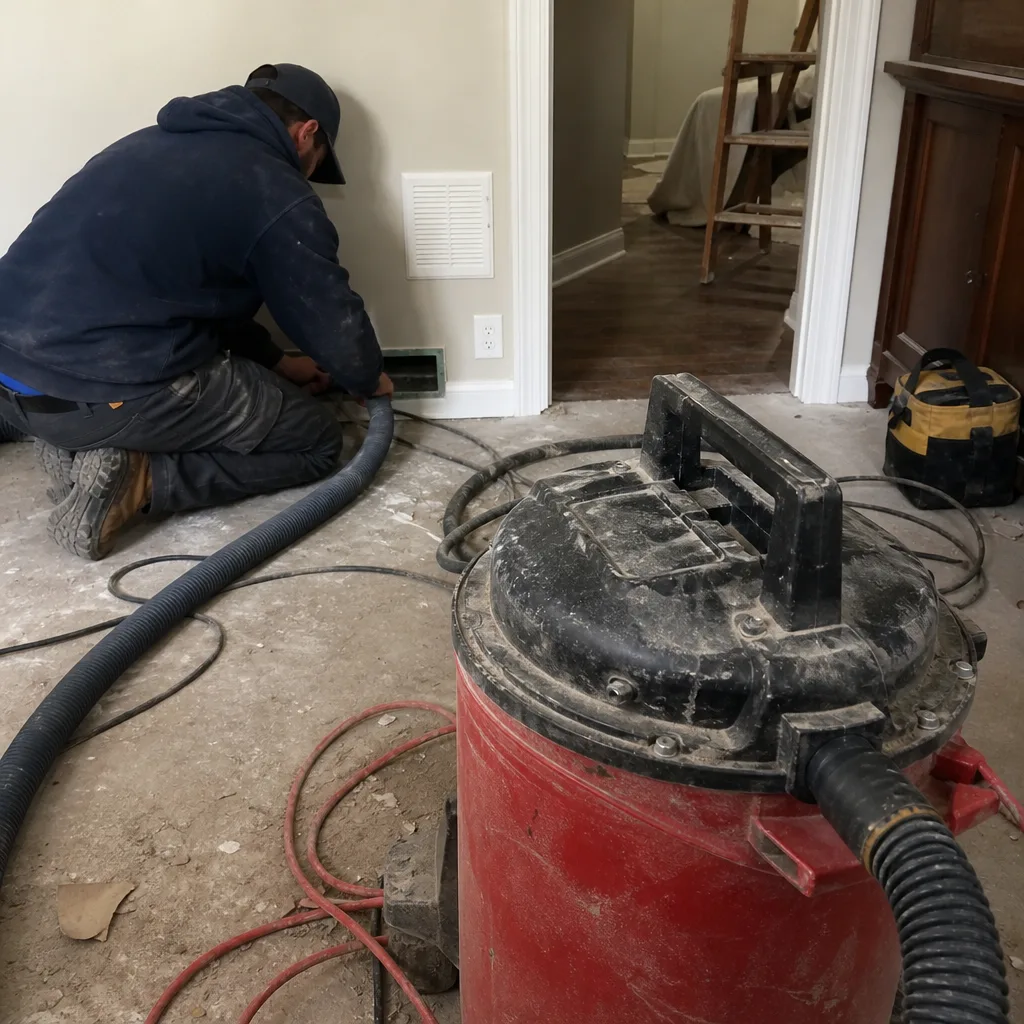
- Negative pressure first. Before any agitation begins, the crew should set up the negative air machine and confirm the system is under vacuum. Cleaning without negative pressure just spreads debris.
- Register and vent sealing. Every register not being actively cleaned should be sealed. If you see open registers with hoses going into one, ask why.
- Debris containment. Drop cloths, containment barriers, and HEPA filtration should be visible. If debris is visibly puffing out of a vent, the containment isn’t working.
- Agitation done systematically. The crew should work through each run methodically, not just blast air through the trunk and call it done.
- Air handler service. The blower, coil, and cabinet should be part of the cleaning. Ducts pull from the air handler; if it’s dirty, the ducts stay dirty.
If a crew skips the negative pressure setup or starts agitating before the vacuum is connected, stop them. That’s not a small inefficiency. That’s the exact scenario the EPA warns about, where settled contaminants get lifted and redistributed through the house.
Post-Job Verification: Camera Footage and Written Scope
You should be able to verify the work without taking anyone’s word for it. Ask for two things at the end of any duct cleaning job: before-and-after camera footage or photos of your ducts, and a written scope confirmation that lists what was cleaned, what was repaired, and what was sanitized. A contractor with camera capability can show you the difference in the duct runs they cleaned. A contractor without it can only tell you it’s clean.
Before-and-after photos of your own ducts are the single most useful proof you can ask for. Not stock photos, not a brochure, your ducts. Ask specifically for that, and ask whether the photos or footage will be shared with you. We take before-and-after photos on every job and send them so you can see the actual condition of your system.
Alongside the footage, the written scope should tell you:
- Which supply and return runs were cleaned.
- What condition the ducts were in when the crew arrived.
- Any damaged sections found, with photos.
- Any repair or sealing performed, and where.
- Whether sanitizing was applied, and to what.
If a contractor resists providing any of this, treat it as a completed job with an incomplete record. For more on how HVAC cleaning fits into the picture and why the air handler is part of the equation, our service page covers the system-wide scope.
Fishtown Housing Stock and Why It Changes the Approach
Fishtown’s rowhouses present duct cleaning conditions you won’t find in a new suburban build. Many homes here date to the early twentieth century, and the original heating systems in those houses ran on radiators or gravity furnaces with no ductwork at all. When central air arrived, ductwork got retrofitted, often run through narrow chases, between joists, or through spaces that were never designed for it. That means flex duct running through tight basement ceilings, trunk lines squeezed into corners, and occasionally a return that shares space with a chimney chase.
What this means for cleaning is that duct type matters more in Fishtown than in most places. Rigid metal duct from an older system takes rotary brush cleaning well. Flex duct with a spring-wire core needs a gentler approach, because a brush can tear the inner liner. That torn liner is one of the most common problems we see when a contractor without the right equipment runs a rotary brush through duct that can’t take it. Once the liner is torn, it traps debris and the duct is permanently compromised. Repair means replacing that section, not cleaning it harder.
The other local wrinkle is basement moisture. Fishtown basements are damp in many homes, and ductwork that runs through a damp basement can develop surface growth on the interior of the duct or at the plenum. A cleaning that ignores this just scrubs the growth loose without addressing the moisture condition that allowed it. We check for this on the assessment pass and flag it honestly. Sometimes cleaning plus sanitizing is the right answer. Sometimes the real fix is a humidification and filtration adjustment through an Aprilaire or Honeywell system, which is why we work with both.
Fishtown’s proximity to construction and renovation matters too. The neighborhood has seen steady renovation over the years, and a house that just had plaster work, drywall sanding, or flooring replaced will have fine dust throughout the HVAC system. That dust doesn’t stay in the ducts. It circulates every time the system runs. Post-renovation cleaning in Fishtown is a genuinely different job than routine maintenance, and it needs a different scope.
Why a Full-System Approach Beats a One-Service Call
A duct cleaning contractor who only cleans ducts is leaving half the problem unaddressed. Your HVAC system isn’t just ductwork. It includes the air handler, the blower, the coil, the filter cabinet, the returns, and every connection between those parts. Clean the ducts and leave the blower caked in dust, and the system recontaminates the ducts on the first run cycle. This is why the equipment list matters beyond cleaning: a contractor set up for a full-system job brings the tools to address the entire air pathway.
Our own approach covers five service categories under one provider so nothing in that pathway gets skipped:
- Air duct cleaning using Rotobrush and Nikro systems, both trusted by commercial and industrial HVAC contractors rather than consumer-grade equipment.
- HVAC cleaning including the air handler, blower, and coil.
- Dryer vent cleaning as a standalone safety service, since a dryer that takes two cycles to dry a load is telling you the vent is restricted.
- Duct repair and sealing to close the leaks and gaps that cleaning alone can’t fix.
- Air quality sanitizing with Abatement Technologies equipment for scenarios where contamination requires controlled handling.
When you hire a contractor, ask whether their scope covers all five. If they only clean ducts, you’ll need a second contractor for the air handler, a third for the dryer vent, and nobody to address the leaks. One provider, one scope, one flat price, one documented job. For homeowners focused on the dryer side of the system, our dryer vent cleaning page covers what that service involves and why it’s a safety matter rather than a convenience.
Common Mistakes to Avoid
- Booking on price alone. The cheapest quote is usually the opening offer on a job that will grow once the technician is inside. Ask for the written scope and total before booking.
- Accepting a per-vent quote. Per-vent pricing means the total depends on how many vents the contractor counts. A flat price per system is the only quote you can actually compare.
- Not asking about equipment. A shop vacuum and a hose is not duct cleaning equipment. Ask specifically for the negative air machine and the agitation system.
- Skipping the air handler. Cleaning ducts without cleaning the blower and coil means the system recontaminates itself on the first run. Confirm the air handler is in scope.
- Ignoring the dryer vent. A restricted dryer vent is a fire risk and a sign the system has buildup. It’s a separate service, and it should be part of your overall air and ventilation check.
- Not asking for before-and-after proof. Photos of your own ducts are the only way to confirm the work was done. Ask before booking, not after.
- Skipping repairs. If a duct liner is torn or a joint is disconnected, cleaning doesn’t fix it. Ask specifically whether the contractor will repair what they find.
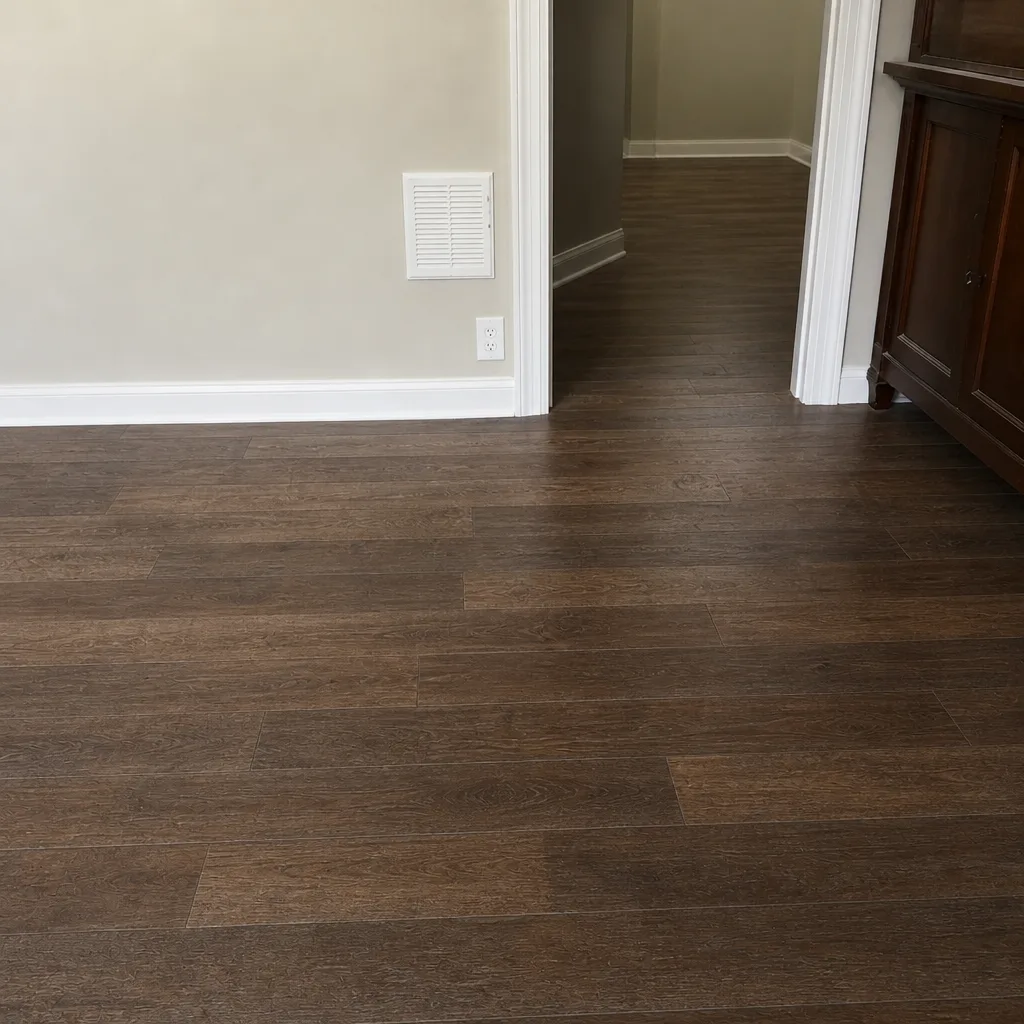
See the difference
 Before
 After
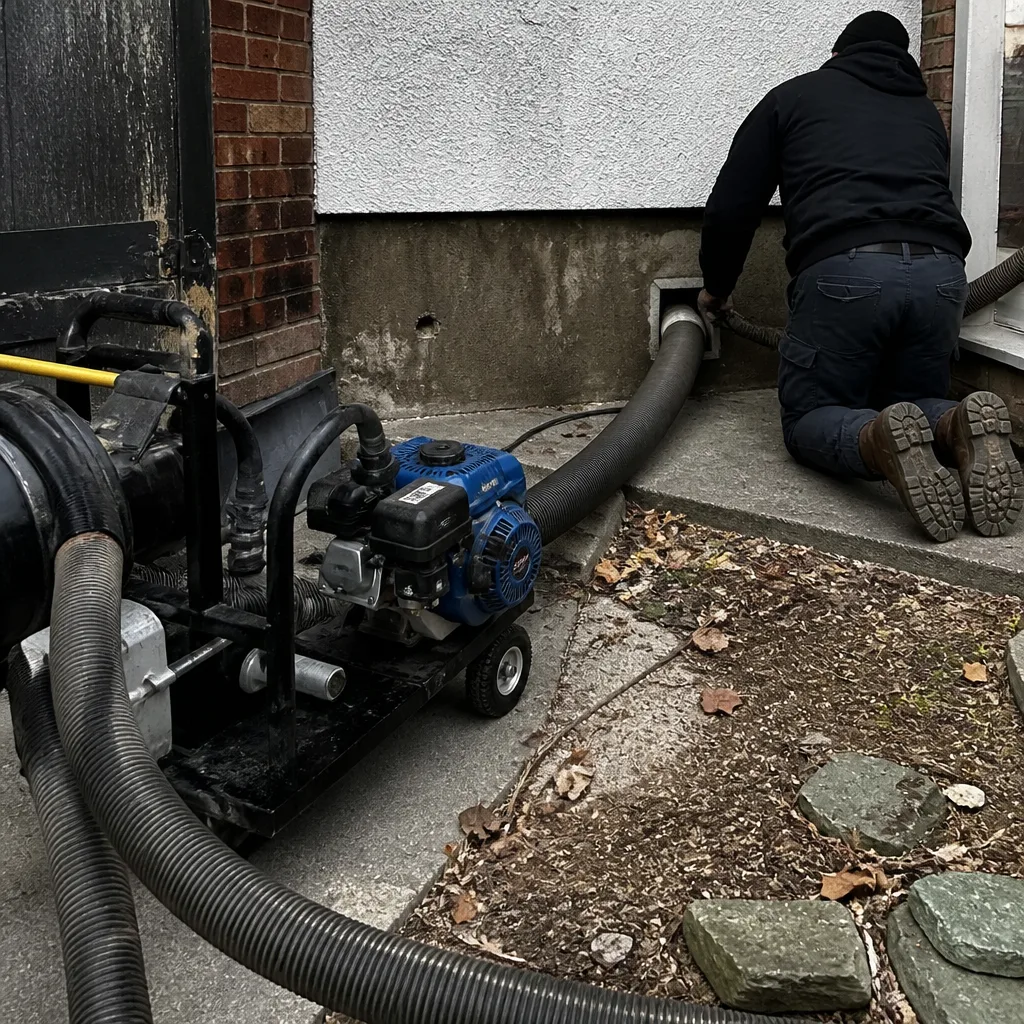 Before
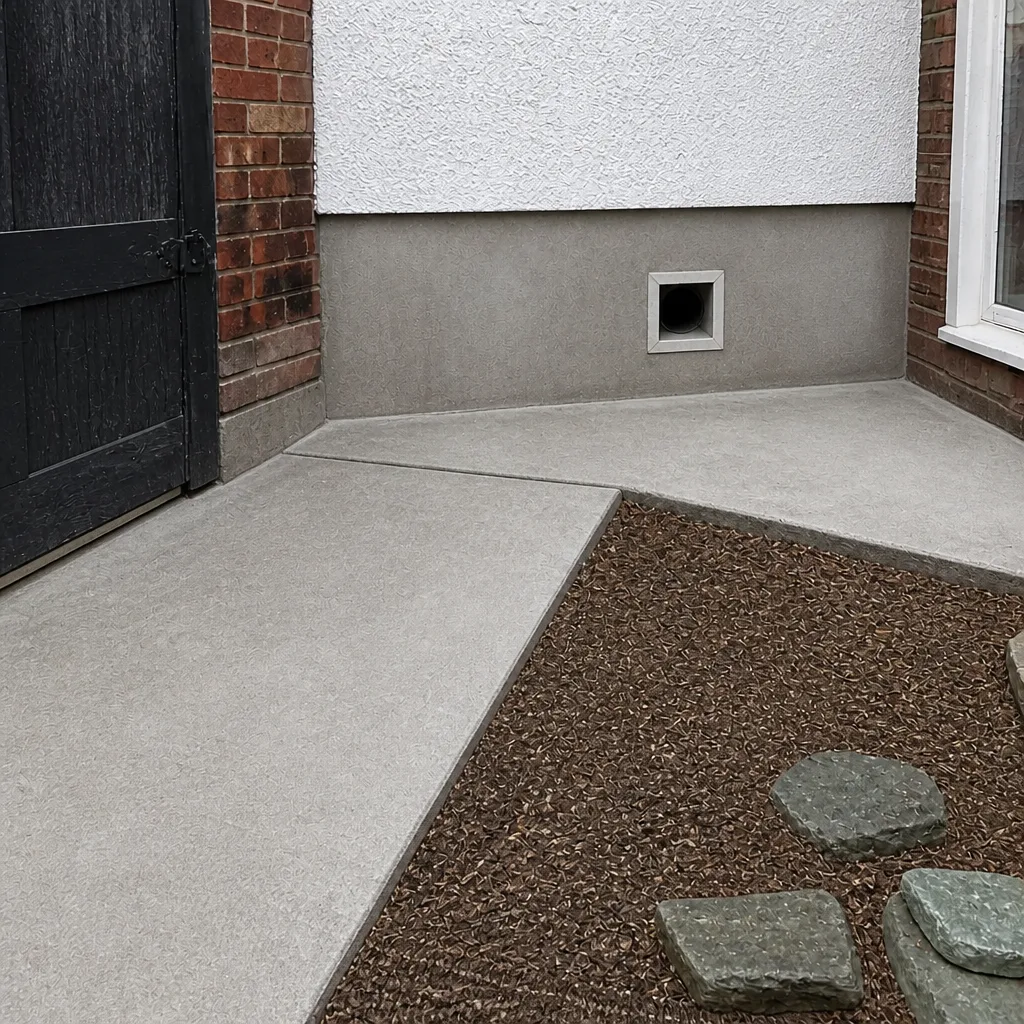 After
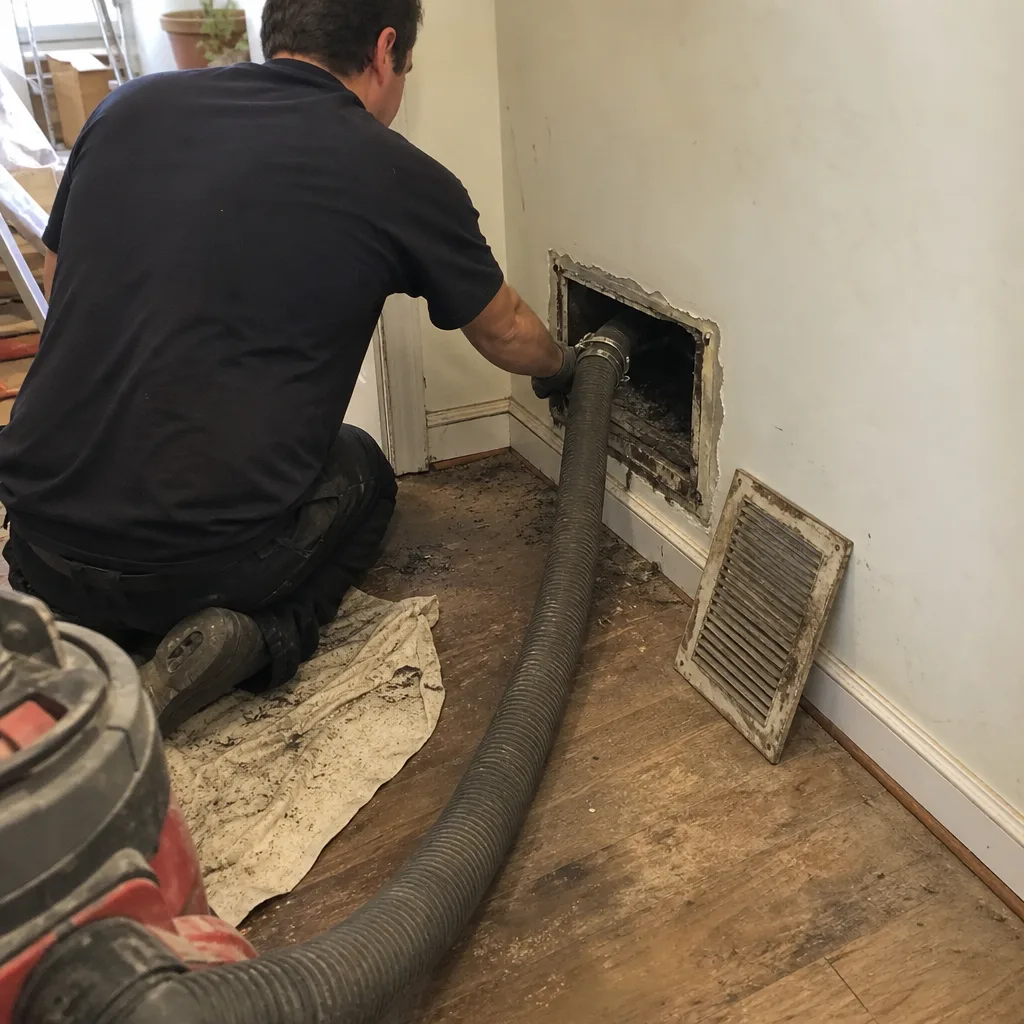 Before
 After
When to Call a Professional
Not every home needs duct cleaning on a calendar schedule, but specific conditions call for a professional assessment. If anyone in the household has allergies or asthma that seem worse indoors, if you’ve recently completed a renovation or plaster work, if the house is older and you’ve never had the ducts inspected, if you see visible dust blowing from registers, or if the dryer takes more than one cycle to dry a load, those are all reasons to get an estimate. The same goes for a musty smell when the system runs, which usually points to moisture or surface growth somewhere in the duct or plenum.
Air Duct Cleaning Fishtown offers free estimates in Fishtown. Call (855) 337-1165. We answer 24/7. Fast dispatch from 7am to 7pm, Sunday through Friday. Our technicians have up to 11 years of experience, and every job runs on professional-grade equipment with photos before and after.
Frequently Asked Questions
Air duct cleaning in Fishtown is priced per system, not per vent, and the final price is set by a written estimate after the contractor assesses your ductwork. Whole-system jobs vary based on the number of runs, the duct material, and whether repairs or sanitizing are needed. The estimate is free, so the fastest way to get a real number for your home is to have someone look at the system. Call (855) 337-1165 for an exact quote – estimates are free.
Cheap quotes are usually teaser prices that grow once the technician is on site, often through per-vent charges, “heavy buildup” fees, or sanitizing add-ons that weren’t in the original number. A legitimate quote lists the scope line by line and gives one flat price per system before work starts. If a quote is dramatically lower than the rest, ask what it actually includes. Call (855) 337-1165 for a written estimate with the scope spelled out.
Ask for before-and-after photos or camera footage of your own ducts, plus a written scope confirmation listing what was cleaned and repaired. A contractor with camera capability can show you the condition of the runs before and after. If a contractor can’t provide proof of the work on your specific system, you have no way to confirm it happened. Call (855) 337-1165 to book a job with before-and-after photos included.
There’s no universal schedule. Routine cleaning for a typical home is driven by conditions: pets, allergies, recent renovation, visible dust at registers, or a musty smell when the system runs. A home that just had major renovation work needs it sooner than one that hasn’t changed. Have the system assessed and let the condition of your ducts set the interval rather than a calendar. Call (855) 337-1165 for a free assessment.
NADCA membership is a useful signal, but what matters in practice is whether the contractor follows the ACR standard: assessing the system first, cleaning without damaging duct lining, and restoring the system afterward. Ask how they handle damage found mid-job and whether they document the work. A membership badge alone doesn’t prove any of that. Call (855) 337-1165 to ask us these questions directly before you book.
Yes. The EPA has warned that improper cleaning can dislodge and redistribute contaminants that were previously settled in the ducts, which means a job done without proper negative pressure and containment can spread debris through the house. The fix is hiring a contractor with the right equipment and confirming negative pressure is established before agitation begins. Call (855) 337-1165 to book a job done with professional-grade equipment and verified containment.
The Bottom Line
Hiring a duct cleaning contractor in Fishtown comes down to equipment, scope, and proof. Ask the five equipment questions before you book. Demand a written flat price per system with the scope listed line by line, not a per-vent quote that grows on site. Confirm the contractor follows the ACR standard and will repair what they find. Watch for register sealing and negative pressure during the job, and ask for before-and-after photos of your own ducts when it’s done. Those checkpoints separate a contractor who cleans your system from one who just makes noise in it. Air Duct Cleaning Fishtown handles the full system, from duct cleaning to repair and sealing, with professional-grade equipment on every job. Call (855) 337-1165 for a free estimate. We answer 24/7. Fast dispatch from 7am to 7pm, Sunday through Friday.
For a full overview of our services and how we approach Air Duct Cleaning Fishtown, start there.
Written by the team at Air Duct Cleaning Fishtown.